

News
The Hiroshima-ICAN Academy 2026: Bridging Divides to Advance Nuclear Disarmament
The International Campaign to Abolish Nuclear Weapons (ICAN) and Hiroshima Prefecture co-hosted the eighth Hiroshima-ICAN Academy on Nuclear Weapons between June 16 and November 7, 2026. As an International Steering Group member of ICAN, Peace Boat plays a central role in the planning and organization of the Academy.
As our world continues to change rapidly, divides are growing in myriad aspects of society, from the global to the personal. Countries are breaking from longstanding allies, international agreements are being discarded, and digital algorithms further tribalism. Borders between states, between “us” and “them,” between humanity and technology are being redrawn. These divides are also apparent in the field of nuclear weapons and global security.
During the Hiroshima-ICAN Academy on Nuclear Weapons and Global Security 2026, participants learned about the humanitarian impact of nuclear weapons and developed skills for disarmament advocacy with this year’s overall theme “Bridging divides to advance nuclear disarmament.”
The Academy took place in two parts: an online learning session with five webinars in June and July with roughly 250 people learning together during each session, followed by a five-day in-person Hiroshima Session from November 3 to 7 with 18 participants from 16 countries and regions.
250 participants learned through webinar sessions
The Academy began with its first webinar on June 16, featuring two guest speakers: Hiroshima hibakusha (atomic bomb survivor) Futagawa Kazuhiko and American downwinder and writer Mary Dickson. Futagawa, who was in his mother’s womb at the time of the atomic bombing, introduced the devastation inflicted upon Hiroshima and its residents, drawing on the experiences of his family members. Following his testimony, Mary spoke about how radioactive fallout from nuclear weapons testing and other nuclear contamination have sickened and claimed the lives of countless people in the United States—including members of her own family and neighbours—as well as communities globally. Both speakers urged participants to share the stories of nuclear victims and survivors and to maintain hope in their advocacy for a peaceful, nuclear-weapon-free world.
Under the theme of “the social, environmental, and economic impacts of nuclear weapons,” historian Robert “Bo” Jacobs delivered a lecture on the radiological contamination resulting from nuclear weapons testing and related nuclear processes during the second webinar on June 19. He argued that for the many communities affected by fallout, the Cold War constituted a limited nuclear war, and warned that radioactive materials will continue to endanger future generations.
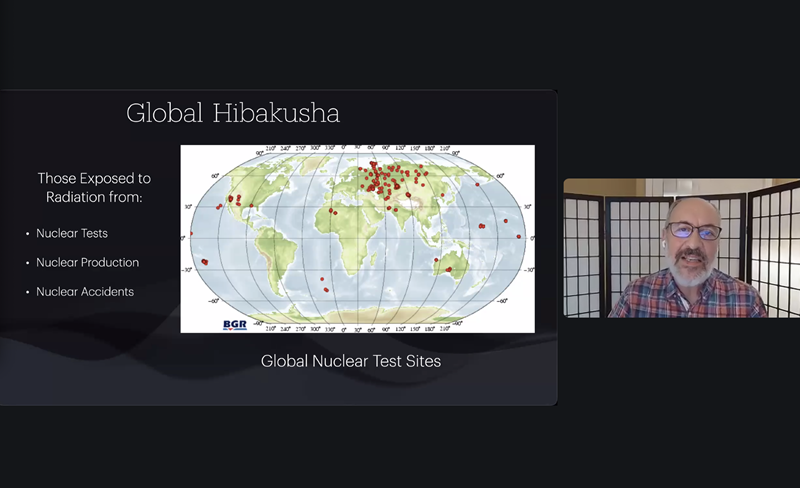
The third webinar was held on June 24, where Laura Considine, Associate Professor in International Politics at the University of Leeds, introduced key concepts of nuclear deterrence alongside their contradictions and counterarguments. During the discussion, participants explored assumptions surrounding rationality and irrationality, feminist and postcolonial critiques of deterrence, and alternative security frameworks. Laura encouraged participants to share their own reflections on deterrence throughout the session, fostering an active and interactive exchange.
Focusing on the roles of the UN and civil society for nuclear disarmament, the fourth webinar on July 1 featured ICAN Executive Director Melissa Parke and ICAN General Counsel and United Nations Liaison Seth Shelden, alongside a video message from Christopher King, Chief of the Weapons of Mass Destruction Branch at the UN Office for Disarmament Affairs (UNODA). Melissa introduced ICAN’s global initiatives advocating for nuclear abolition, centred on promoting the universalization of the Treaty on the Prohibition of Nuclear Weapons (TPNW). Seth then elaborated on ICAN’s origins, strategic approach, and engagement with diplomats and governments.
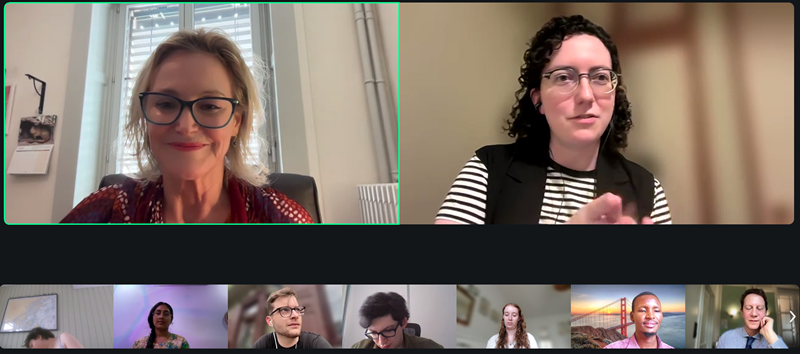
The final webinar on July 2 explored the Academy’s overarching theme, “Bridging Divides to Advance Nuclear Disarmament.” Jason Robinson, Deputy Permanent Representative to the Conference on Disarmament at the Permanent Mission of Ireland to the United Nations in Geneva, spoke about Ireland’s diplomatic efforts to advance nuclear disarmament through the Nuclear Non-Proliferation Treaty (NPT), the TPNW, and the UN-mandated Scientific Panel on the Effects of Nuclear War.
First-hand testimonies and overlooked consequences of the atomic bombings
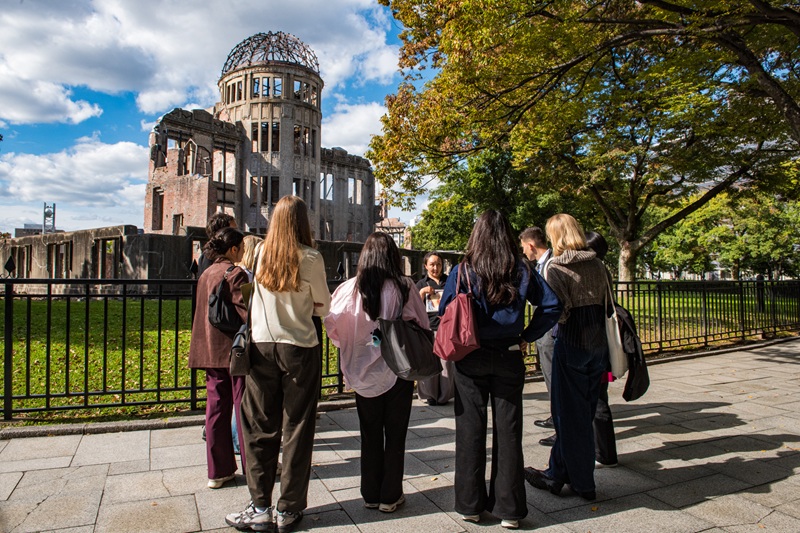
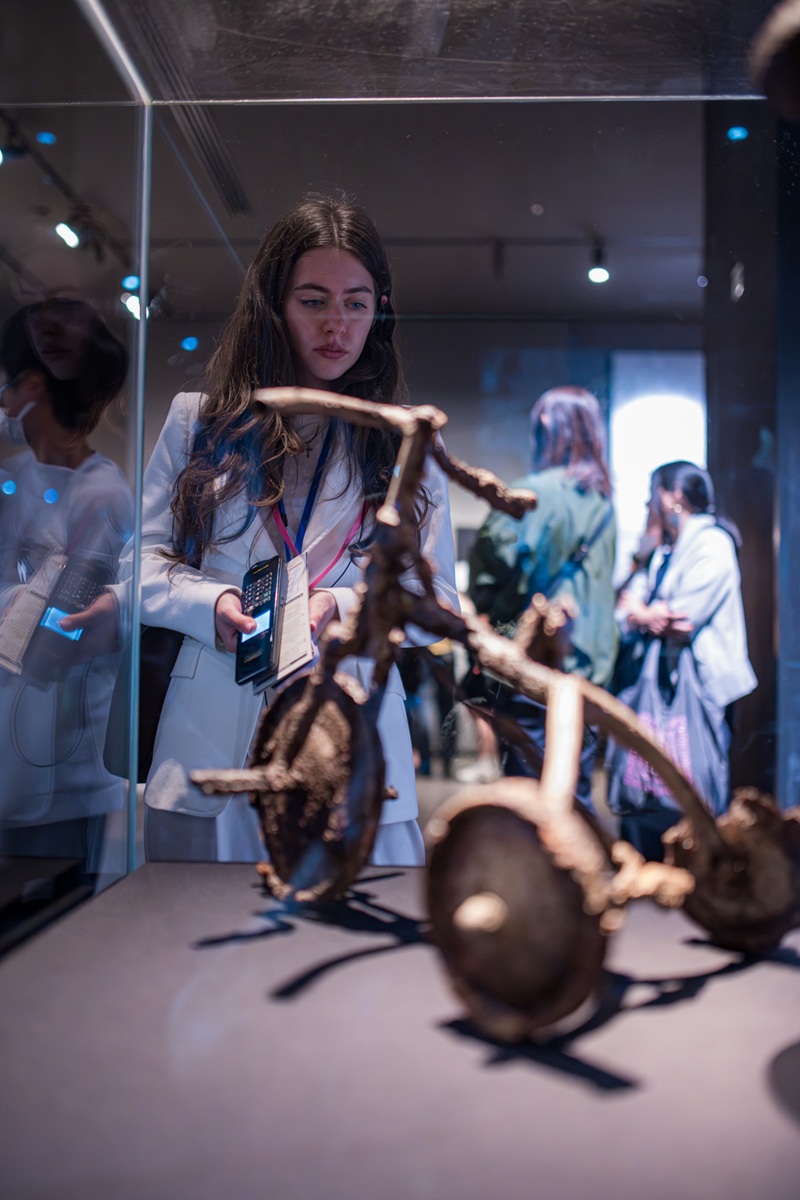
The in-person Hiroshima Session kicked off on November 3 with 18 participants, who hailed from five nuclear weapon states (United States, Russia, United Kingdom, France and China) and other 11 countries and regions (Algeria, Germany, Korea, Mexico, Moldova, Pakistan, Portugal, Romania, Sweden, Taiwan and Ukraine). Participants began their field learning with a guided tour of the Hiroshima Peace Memorial Park and a visit to the Hiroshima Peace Memorial Museum, where they explored the history of the bombing through victims' belongings, photographs, and historical records.
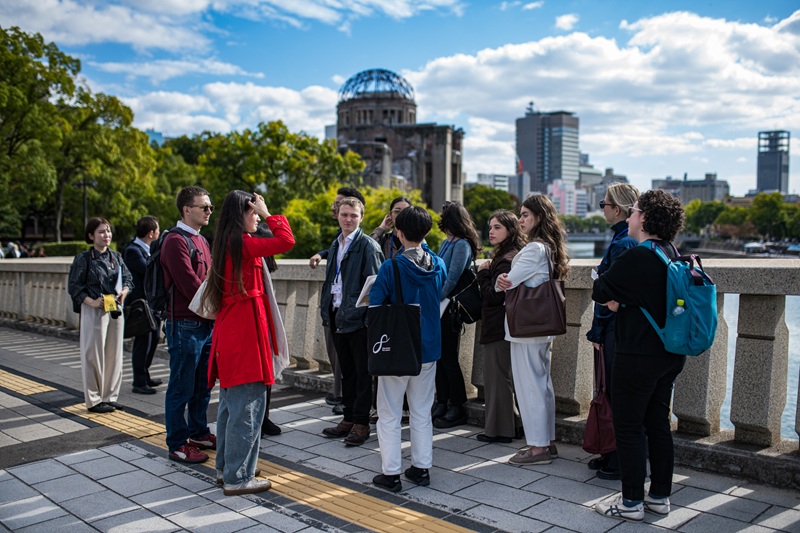
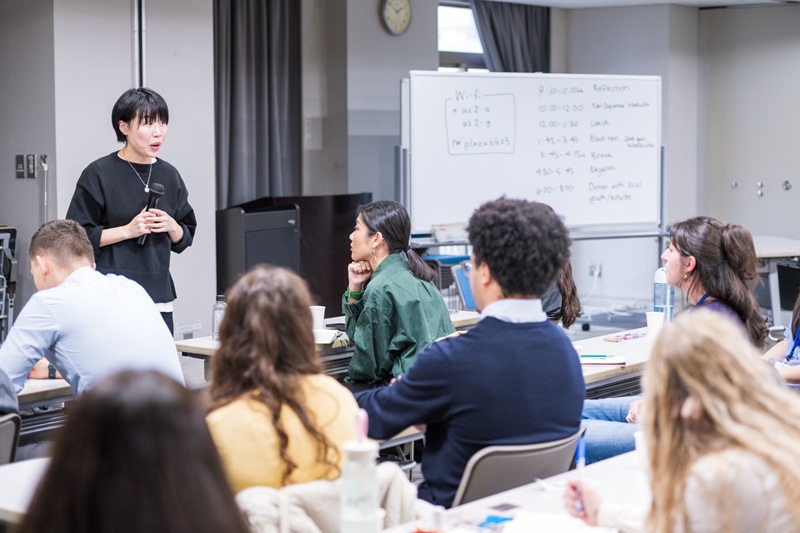
Over the following days, the programme focused deeply on first-hand testimonies and often overlooked histories of the atomic bombings. Participants met directly with hibakusha Kajimoto Yoshiko, Kasaoka Sadae, and Goto Toshiharu —who were 14, 12, and 6 years old at the time of the bombing, respectively—as well as denshosha (legacy successor) Mozume Megumi, who shares the stories of Korean atomic bomb victims Park Nam-joo and Lee Jong-keun. Participants also learned about individuals affected by atomic bomb-induced microcephaly and the work of Kinokokai from Hirao Naomasa, and participated in an advocacy workshop led by ICAN’s Florian Eblenkamp on rallying support for the Treaty on the Prohibition of Nuclear Weapons (TPNW).
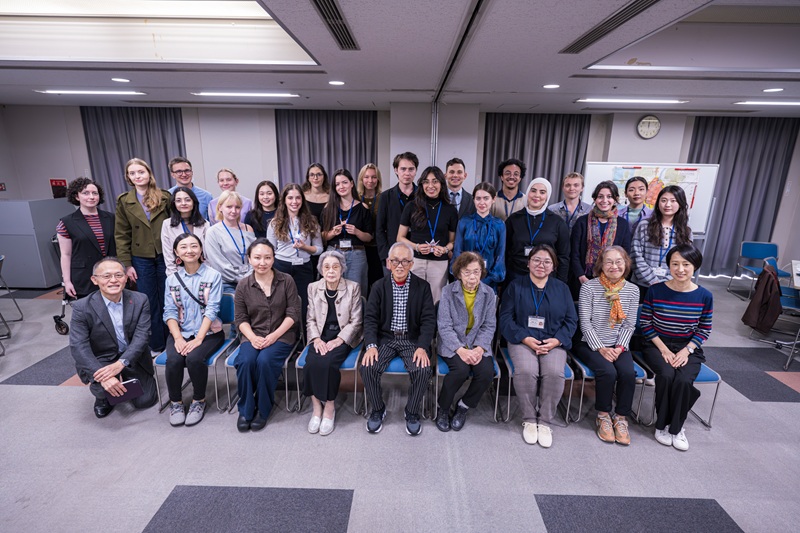
Further broadening their historical and regional understanding, participants attended a lecture by former social sciences teacher Taga Shunsuke on non-Japanese hibakusha—highlighting the estimated 50,000 Koreans in Hiroshima on August 6, 1945, alongside Chinese and Southeast Asian victims, Allied prisoners of war, European priests, and Russian and US nationals. Other sessions featured journalist Koyama Misa on “black rain,” radioactive fallout, and second-generation hibakusha, as well as Hayashida Mitsuhiro on the distinct experiences of Nagasaki and its peace education initiatives. Throughout the week, participants also connected with young peace activists and volunteers in Hiroshima, including local guides who lead English-language tours of the Peace Memorial Park, and visited historic sites such as Hiroshima Castle and Shukkeien Garden to see A-bomb survivor trees and learn about the city's wartime history and post-bombing refuge sites.
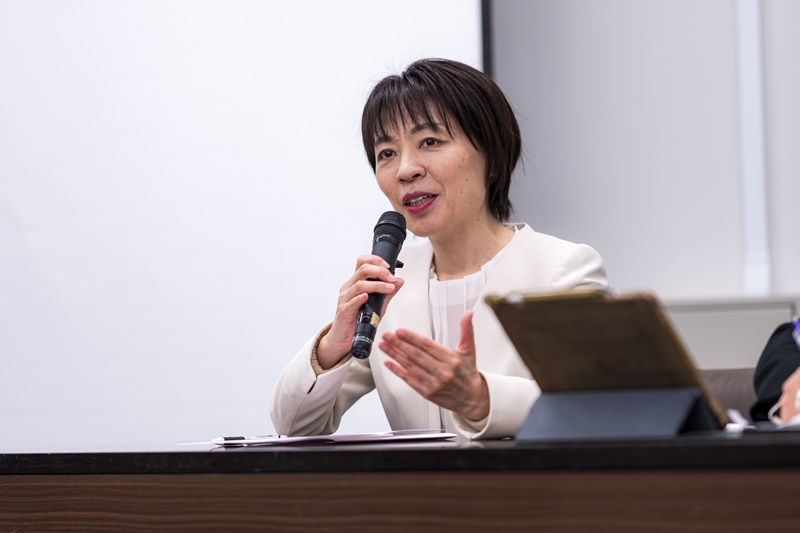
The programme also provided opportunities to engage directly with local leadership. Participants had the honour of meeting with Hiroshima Governor Yokota Mika to share their commitment to disarmament, and learned about Hiroshima Prefecture's initiatives. Hiroshima City Deputy Mayor Morikawa Seiki also gave a presentation on the city's peacebuilding efforts.
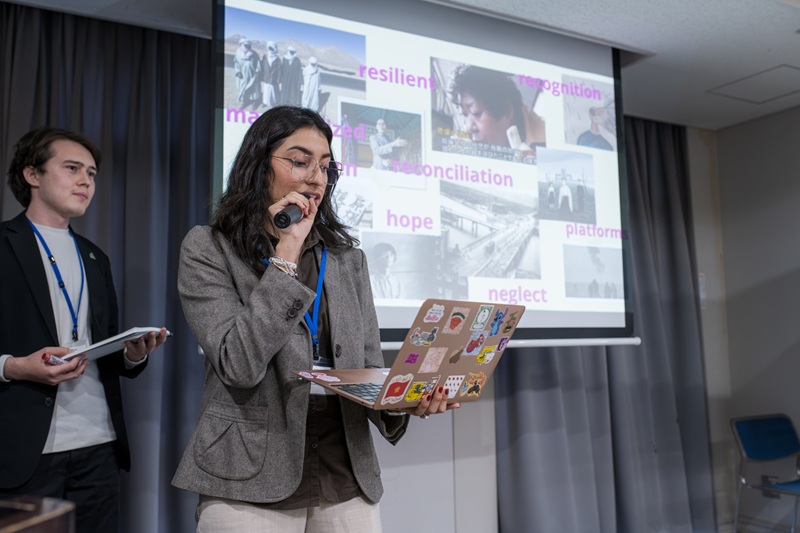
To conclude the Academy on November 7, participants divided into three groups to deliver public presentations on the theme “Bridging Divides to Advance Nuclear Disarmament”:
- Group 1 focused on marginalization, examining the ongoing impacts of past nuclear tests conducted by nuclear-armed states, such as France in Algeria and the former Soviet Union in Kazakhstan.
- Group 2 envisioned a future world in the year 2067 where nuclear weapons have been abolished and ICAN is no longer needed, contrasting that vision with present-day realities to underscore the urgency of disarmament.
- Group 3 explored how to bridge policymakers and survivor testimonies, highlighting key messages such as “the power of people is more important than the people in power” and the imperative that the catastrophe of nuclear weapons must never be repeated.
Equipped with new knowledge, networks, and inspiration, the 2026 cohort now returns home ready to advance the movement for a nuclear-weapon-free world in their respective communities and globally.
Organisers would like to express our special thanks to the three coordinators - Annelise Giseburt, Fukuoka Nao and Tashiro Mirei - for their preparation, facilitation and hospitality in Hiroshima. Peace Boat staff members Kawasaki Akira and Watanabe Rika developed and organised the programme in cooperation with the Hiroshima Prefecture and the ICAN staff team in Geneva.