News
World Krill Day Youth Webinar Recap: Krill, Climate, Peace, and the Future of Antarctica
Three species of large whales—southern right whales, fin whales, and humpback whales—were recently observed in the South Orkney Islands feeding together on Antarctic krill. According to research scientist Dr. Matthew Savoca, this may be the first time that multiple species of large whales have been seen feeding side by side in this way.
Dr. Savoca shared this and other recent observations about whales, krill, and the Antarctic ecosystem during an international youth webinar held to mark World Krill Day on August 11. Organized by the Climate Ocean Research Institute (CORI), FoE Japan, and Agenda Antártica, with support from the Antarctic and Southern Ocean Coalition (ASOC) and Peace Boat, the webinar brought together scientists, storytellers, and young people from China, Japan, and Korea. Peace Boat volunteer interpreter Kano Aina, a student of Marine Bioresources at Mie University, participated as a youth commentator.
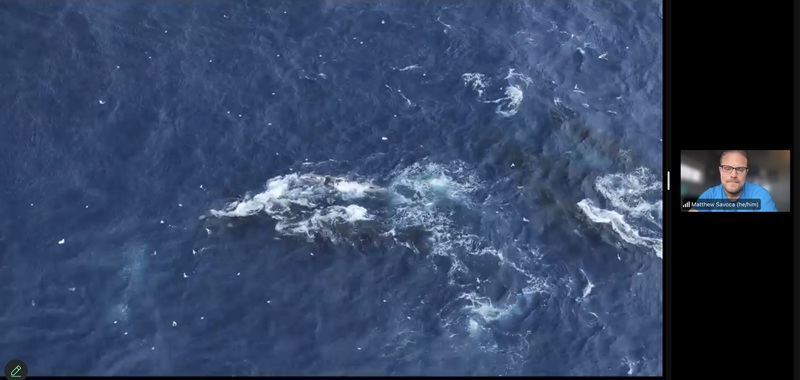
Dr. Savoca went on to explain the important role Antarctic krill play in the Southern Ocean ecosystem. Although only a few centimeters long, krill are at the center of the Southern Ocean food web. They support whales, seals, penguins, seabirds, and many species of fish. Krill are also increasingly harvested for commercial use, including as feed for farmed fish and in products such as krill oil supplements. As whale populations recover, their feeding areas increasingly overlap with areas where krill are being harvested. Protecting krill and their Antarctic environment helps protect the many animals that depend on them.
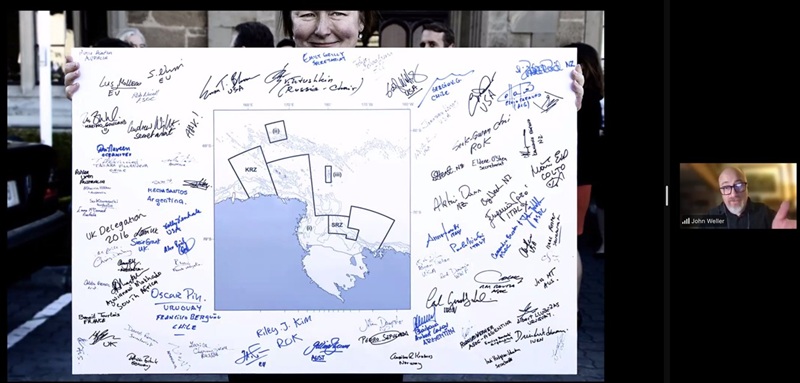
Nature photographer and filmmaker John Weller then shared his experience working to protect the Ross Sea. He showed his photographs from Antarctica and told the story of how he and a small group of passionate people worked for more than a decade to help establish the Ross Sea Region MPA—the world’s largest marine protected area. He explained how research, collaboration, and “communicating the right thing to the right audience” helped bring international attention to the area and build support for its protection. Mr. Weller ended his presentation by encouraging the youth participants to find an issue they care about, speak up, and perhaps help create the next Marine Protected Area.
In her commentary, Aina said the speakers helped her see the importance of the smaller species that support marine ecosystems. She hopes that sharing this knowledge with others can help people make better choices and speak up for more sustainable practices.