

News
Voyage to a Nuclear-Free World: Commemorating the 5th Anniversary of the Nuclear Ban Treaty
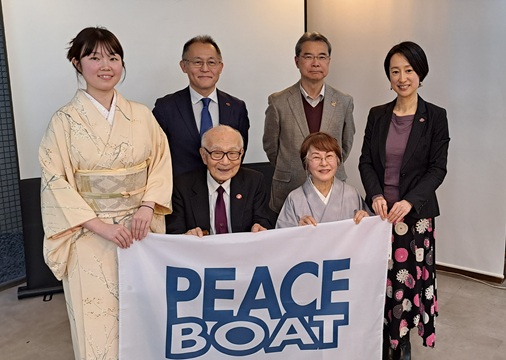
On January 22, 2026, marking the fifth anniversary of the entry into force of the Treaty on the Prohibition of Nuclear Weapons (TPNW), Peace Boat hosted a special commemorative event entitled “Voyage to a Nuclear-Free World.” The gathering brought together the voices of Hibakusha (atomic bomb survivors), survivors of nuclear testing from around the globe, and dedicated supporters to reflect on the treaty’s progress and the path ahead.
A poignant moment occurred backstage before the event began: Fukushima Tomiko, a survivor who was an infant at the time of the bombing, was seen carefully adjusting the kimono sash of Nakamura Suzuka, a young activist representing the next generation. This simple gesture—the hands of a survivor who long struggled with the lack of personal memory of the blast, meeting the hands of a third-generation descendant seeking new ways to pass on those stories—symbolized 80 years of history being entrusted to the future.
The Significance of the TPNW: Present and Future
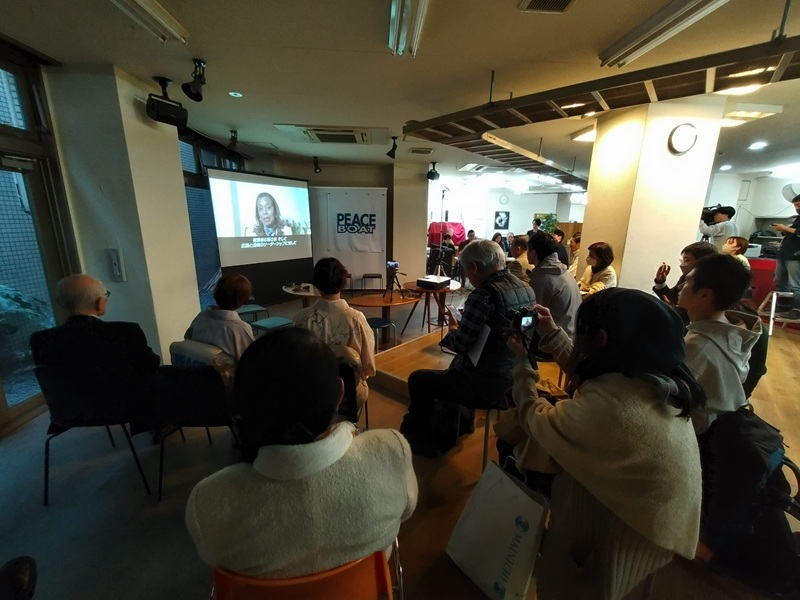
Melissa Parke, Executive Director of the International Campaign to Abolish Nuclear Weapons (ICAN), addressed the audience in a video message by highlighting the upcoming Review Conference at the United Nations this November, and expectations that it will "provide a clear contrast with the NPT review conference that will be held earlier in the year in the following ways. The TPNW review conference will center the stories and work of impacted communities and provide progress towards international assistance for those communities and their environments."
She reiterated the urgent call for the Japanese government to join the treaty, stating that "it is only by renouncing its reliance on nuclear weapons and working to eliminate them instead that Japan can achieve true security and provide the moral and political leadership the world needs."
Elayne Whyte Gómez, former Vice-Minister of Foreign Affairs of Costa Rica and President of the TPNW negotiations at the United Nations, reminded attendees: "The TPNW is a real and living instrument that you helped bring into being, and that we must continue to strengthen." Amidst rising global tensions and a new arms race, she stressed the need to continue "amplifying the call calmly and persistently, that the only stable and sustainable nuclear strategy is nuclear disarmament."
Peace Boat’s Kawasaki Akira added, "There are days when we may feel powerless, but this treaty proves that we can change history. We can stop wars, and we can eliminate the tools of war."
80 Years of Testimony and the Burden of Memory
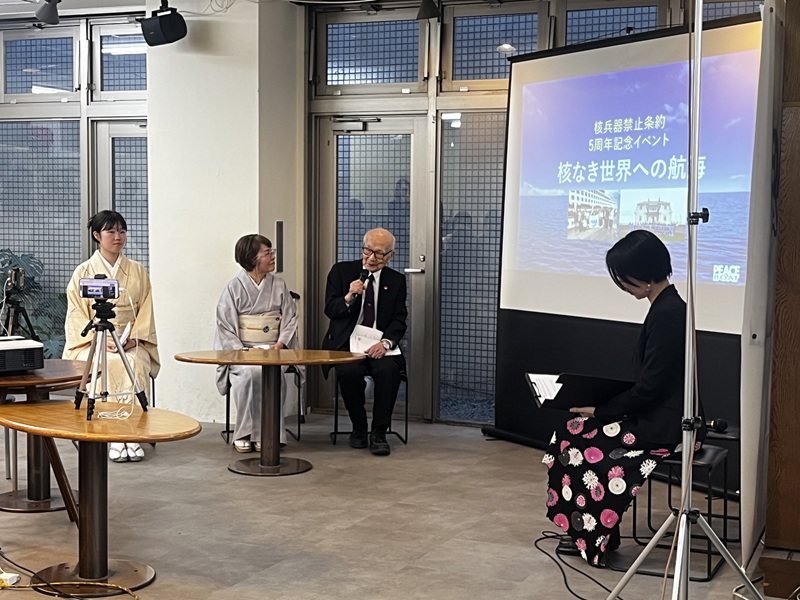
Tanaka Terumi, Representative Director of Nihon Hidankyo, took the stage with a bittersweet reflection: "I wish the treaty had been created another ten years ago. So many of the comrades I walked with are already gone." Despite the milestone of being awarded 2024 Nobel Peace Prize, his words carried the weight of the many survivors who did not live to see this anniversary. Now 93, Tanaka emphasized that the greatest danger is "youth remaining indifferent," urging the next generation to envision the world they want to live in and take action to achieve it.
Fukushima Tomiko, who was only six months old when the bomb fell on Hiroshima, shared her journey of breaking a decades-long silence. For years, she felt she had "no right to speak" because she had no memory of the event. However, she began her activism at age 70, realizing that "even without memory, I can speak for the nameless survivors." She encouraged others to find their own creative ways—through dance, music, or art—to carry the message of peace.
Peace Boat Hibakusha Project: A Global Network of Survivors
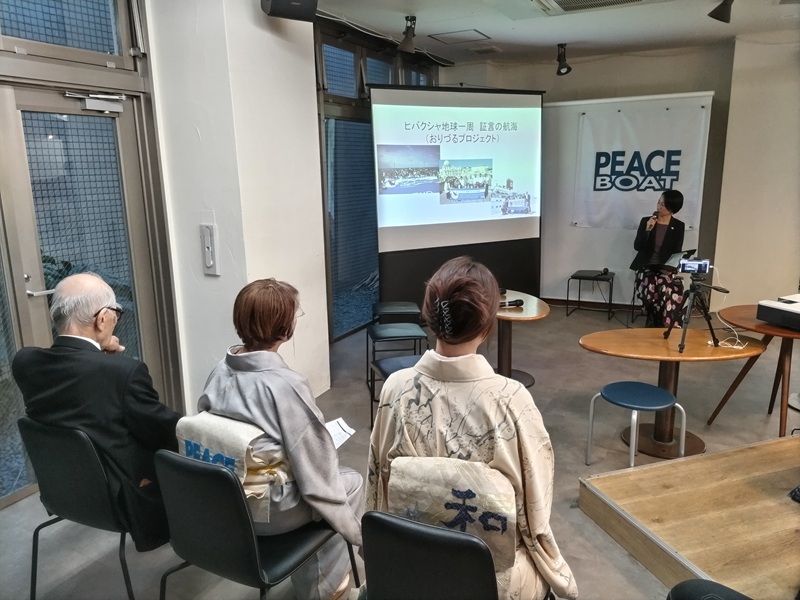
Peace Boat’s Watanabe Rika reported on the Peace Boat Hibakusha Project: Global Voyage for a Nuclear-Free World, which has enabled Hibakusha to travel to over 100 cities in 60 countries since 2008. These missions have included high-level meetings with world leaders, including the presidents of Colombia, French Polynesia, Greece, Nicaragua, Seychelles and Venezuela, and foreign ministers of El Salvador, Iceland, the Netherlands and Samoa.
Even when the COVID-19 pandemic grounded Peace Boat’s ship, the project continued through online testimonies. Today, Peace Boat is host to a dedicated outreach edition of the Nobel Peace Center's exhibition "A Message to Humanity," carrying the Hibakusha's message of nuclear abolition to every port we visit throughout the world.
Strategies for a Sustainable Peace
The event was also a space for youth activists to present concrete strategies for the future. Nakamura Suzuka, a third-generation survivor from Nagasaki now working with the Borderless Foundation, advocated for a structure that allows peace activism to be a sustainable "life’s work" rather than just volunteerism.
Joël Naoki Christoph, who sailed together with the Hibakusha onboard Peace Boat, shared his experience interpreting for survivors: "Disarmament is not only negotiated in conference rooms. It is built through relationships, repetition, and courage, and through the decision to keep telling the truth even when it is difficult."
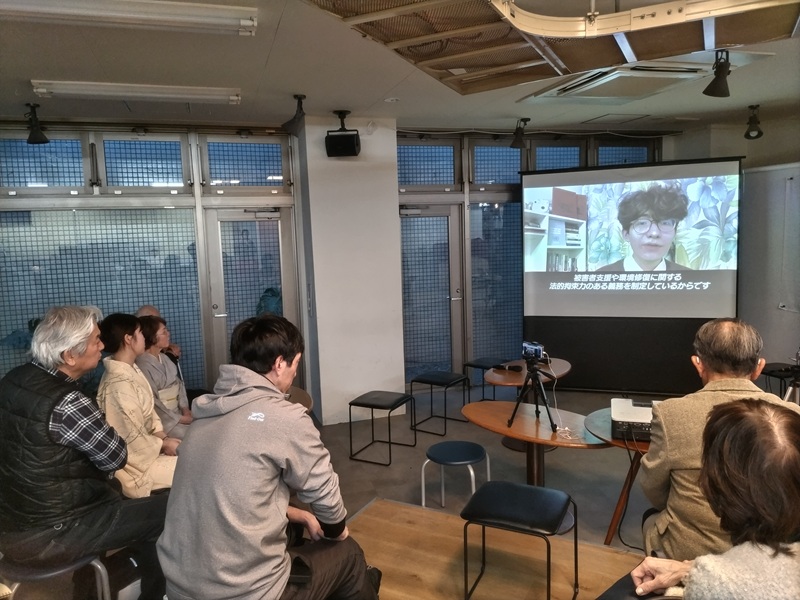
The international perspective was further enriched by video messages from partners in impacted communities around the world. This included Ihirau Piton of Maohi Nui, recorded onboard Peace Boat where he was sailing as a Guest Educator, who spoke on the "violence of nuclear testing in colonial territories," as well as Alisher Khassengaliyev, co-founder of the Kazakh youth organisation Steppe Organization for Peace (STOP), who described the multi-generational suffering caused by over 450 Soviet nuclear tests. Both emphasized that their communities bear a unique responsibility to pursue justice and a nuclear-free world.
A Shared Responsibility
The event concluded with a message from Setsuko Thurlow, a leading activist and Hiroshima survivor living in Canada. Recalling her struggle to crawl out from under the rubble at age 13, which she also quoted in her powerful 2017 Nobel Peace Lecture, she urged: "We must work harder than ever to escape this current darkness. Keep moving, towards the light. Do not give up."
Finally, Peace Boat’s Director Yoshioka Tatsuya reminded the audience that the challenge of nuclear abolition does not belong to youth alone—it is a collective responsibility for everyone living in Japan, and anywhere in the world.
As the TPNW enters its sixth year, the event served as a powerful renewal of the shared commitment to navigate toward a world without nuclear weapons.
Watch the event online below (in Japanese language, except for video messages throughout in English.)
Melissa Parke: from 01:54
Elayne Whyte Gómez: from 07:10
Joel Naoki Christoph: from 52:58
Ihirau Piton: from 1:01:47
Alisher Khassengaliyev: from 1:05:30
Setsuko Thurlow: from 1:26:20