From the Ship
Bridging Generations and Truths: Cultural Resilience with Ihirau Piton
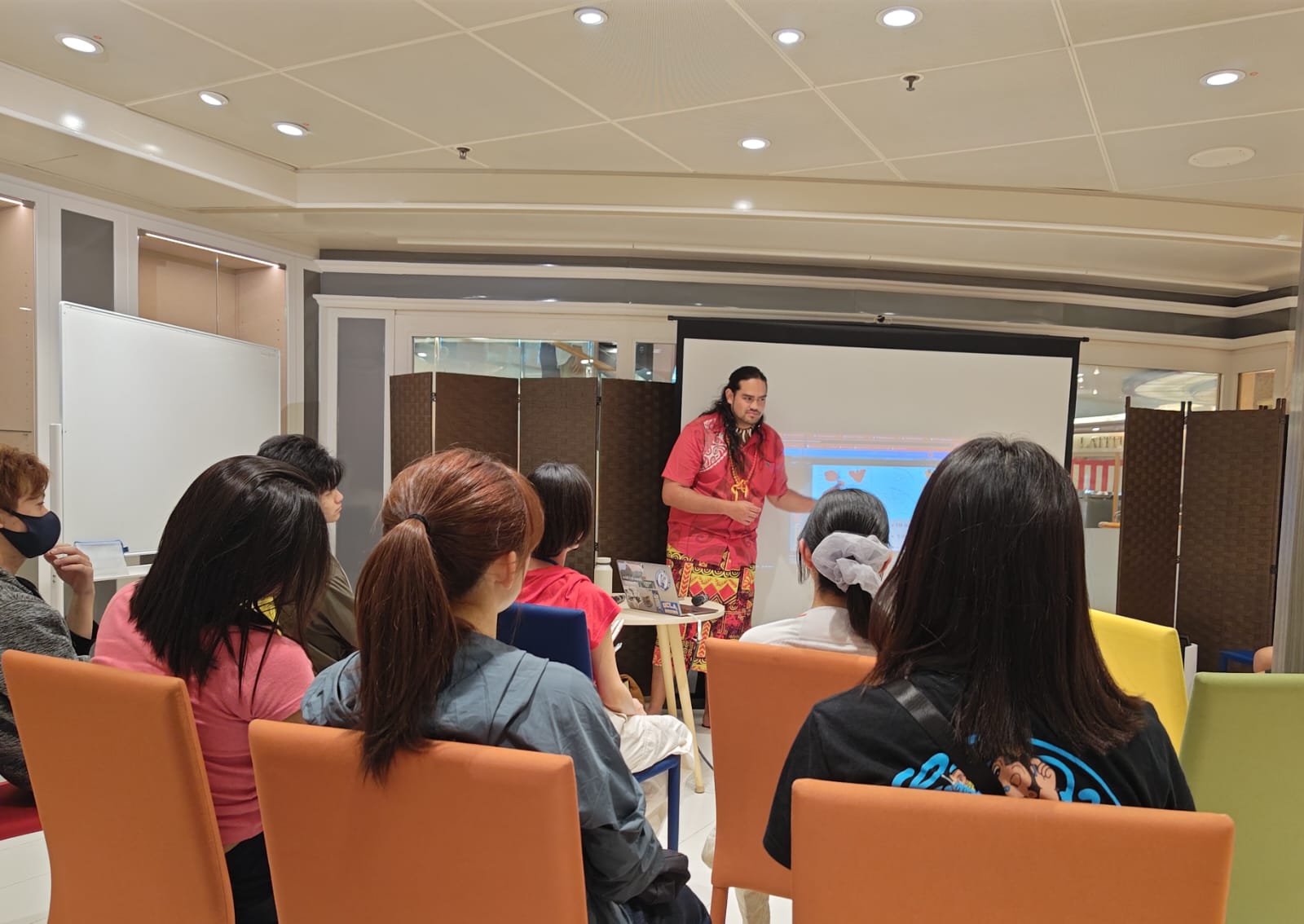
During the 122nd Global Voyage, Peace Boat welcomed Tahitian scholar and cultural advocate Ihirau Piton as a Guest Educator. Boarding the ship in Honolulu, Ihirau brought a powerful perspective on the history, culture, and contemporary challenges of the Pacific.
Ihirau opened his series of talks with an engaging introduction to the Polynesian Triangle, the vast oceanic region connecting Hawaiʻi, Tahiti, and Rapa Nui. Through this overview, he explored the deep cultural and historical connections that link communities across the Pacific. His lectures encouraged participants to look beyond the familiar imagery of island tourism and instead understand the Pacific as a living cultural landscape shaped by centuries of navigation, knowledge sharing, and resilience. Drawing from both traditional storytelling and contemporary scholarship, Ihirau invited passengers into thoughtful dialogue about identity, responsibility, and the enduring spirit of Pacific peoples.
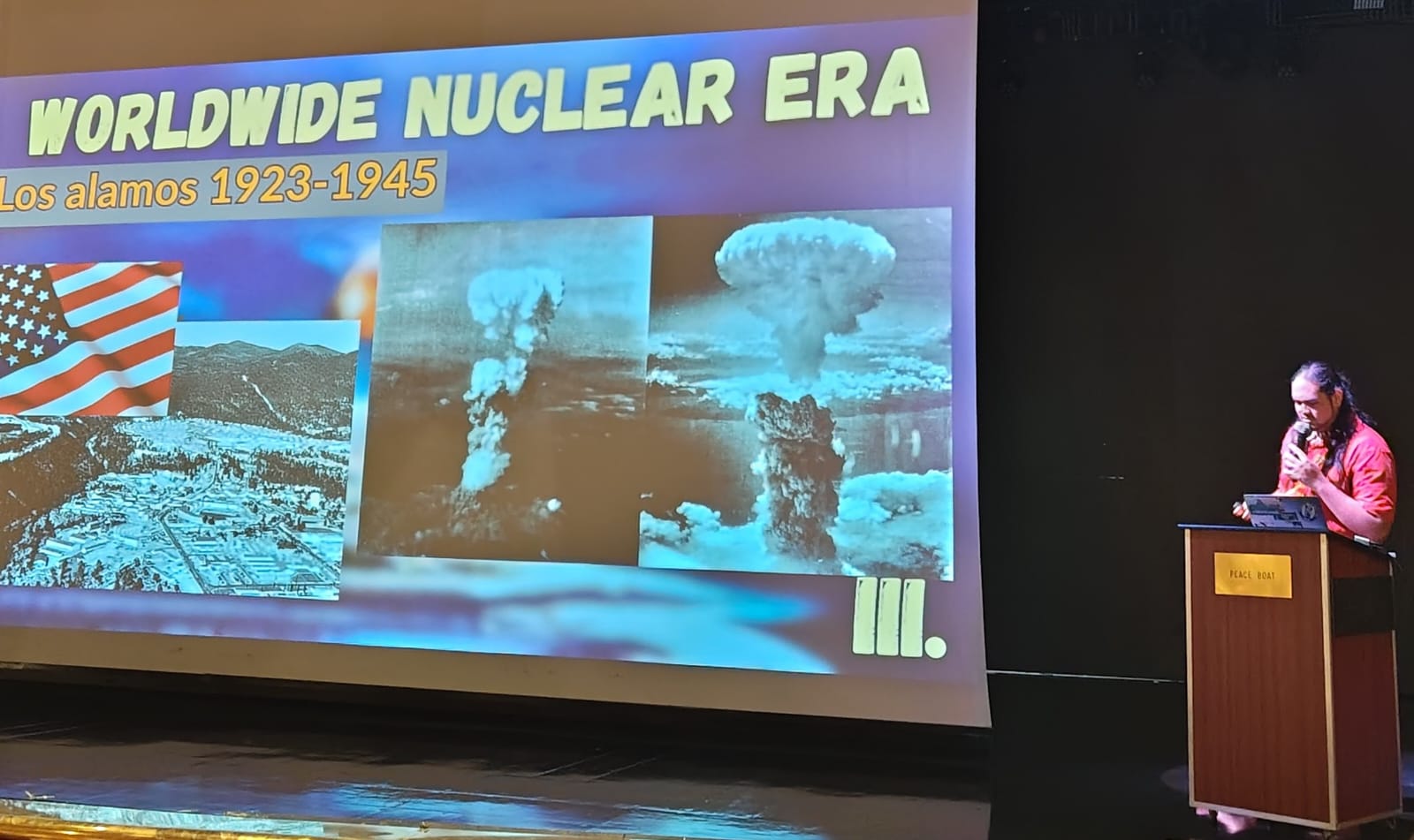
Ihirau’s presence onboard also marked the continuation of Peace Boat’s longstanding partnership with the Tahitian NGO Moruroa e Tatou. Since 2001, the organization has advocated for former workers and families affected by the 193 atmospheric and underground nuclear tests conducted by France at Moruroa Atoll and Fangataufa Atoll.
In a powerful concluding lecture, as well as a dedicated session for the ship’s youth participants, Ihirau addressed the colonial history and environmental legacy of the Pacific Experimental Center. He spoke about the ongoing struggle for recognition and compensation for those affected by the tests, particularly regarding long term health impacts such as thyroid cancer.
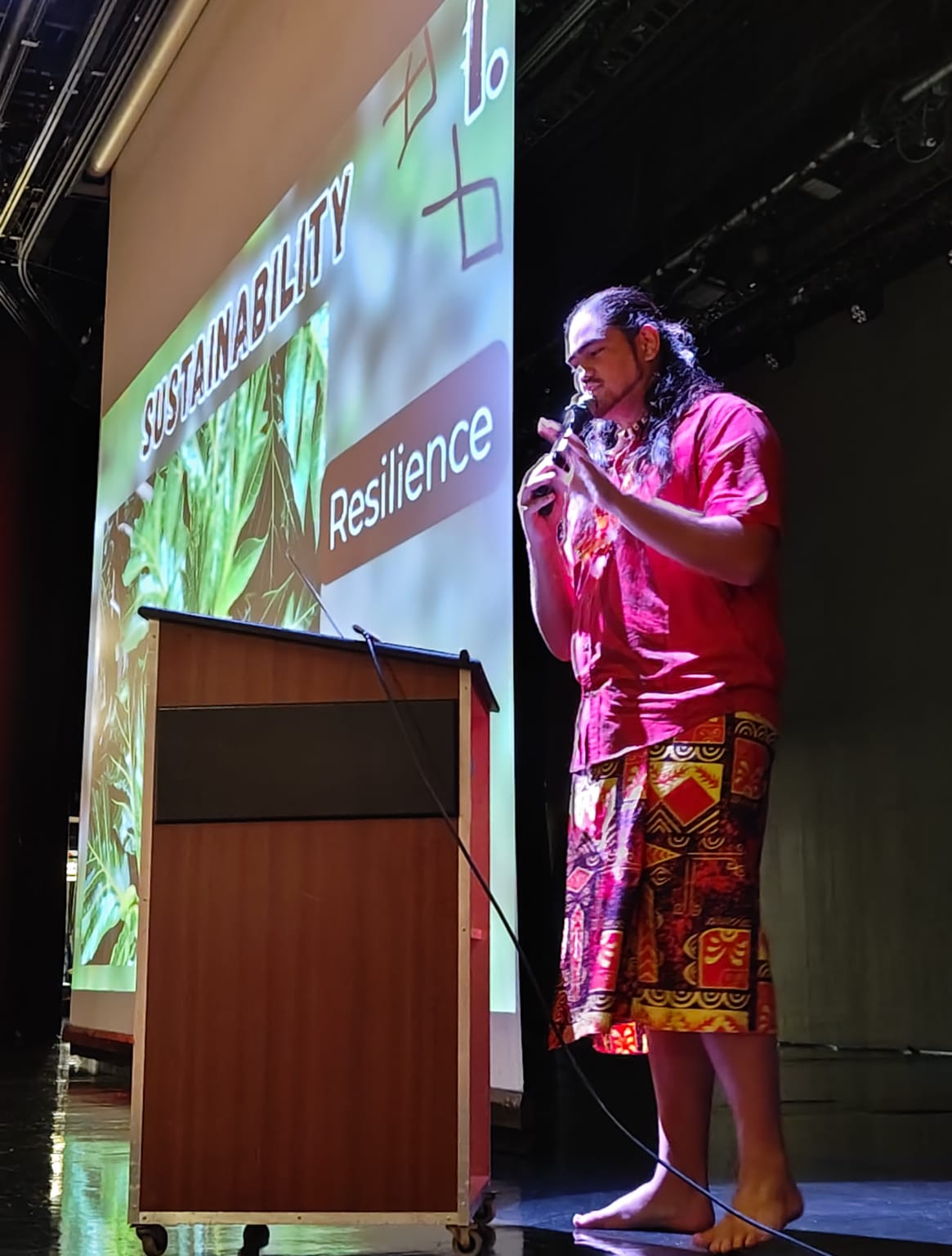
As part of a new generation stepping forward to continue this advocacy, Ihirau’s work bridges the gap between historical trauma and cultural reclamation. By blending traditional narratives with modern social science perspectives, he offered passengers a deeper understanding of the resilience of the Mā'ohi people and the importance of protecting both cultural heritage and environmental justice.
His time onboard served as a reminder that learning from lived histories, and listening to the voices of those directly impacted, are essential steps toward building a more just and accountable world.