From the Ship
A Historic Day for the Ocean, Celebrated at Sea
On 17 January 2026, a long-awaited milestone for ocean protection was reached: the Agreement on the Conservation and Sustainable Use of Marine Biological Diversity of Areas Beyond National Jurisdiction (BBNJ Agreement), commonly known as the UN High Seas Treaty, officially entered into force.
This landmark treaty establishes, for the first time, a comprehensive global framework to protect biodiversity in areas beyond national jurisdiction — the high seas. These waters lie outside any single country’s control and cover nearly two-thirds of the ocean, representing almost half of the Earth’s surface. Despite their vastness and ecological importance, the high seas have long lacked effective governance, leaving marine ecosystems vulnerable to overfishing, pollution, and the accelerating impacts of climate change.
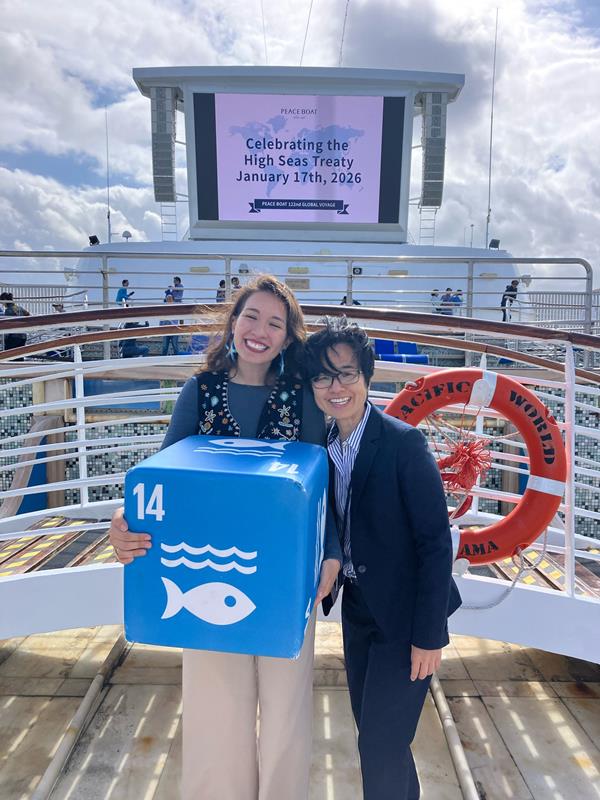
The High Seas Treaty addresses this gap by enabling the establishment of marine protected areas in international waters, strengthening environmental impact assessment requirements, promoting the fair and equitable sharing of benefits from marine genetic resources, and supporting capacity-building and technology transfer for developing countries. Together, these measures represent a critical step forward in safeguarding ocean health and advancing global commitments such as the UN Sustainable Development Goals — particularly SDG 14: Life Below Water.
As part of Peace Boat’s education and advocacy work for the SDGs, ocean protection is a core priority. While sailing through international waters, we had the unique opportunity to mark the treaty’s entry into force from the very seas it is designed to protect — a moment that was both symbolic and deeply meaningful.
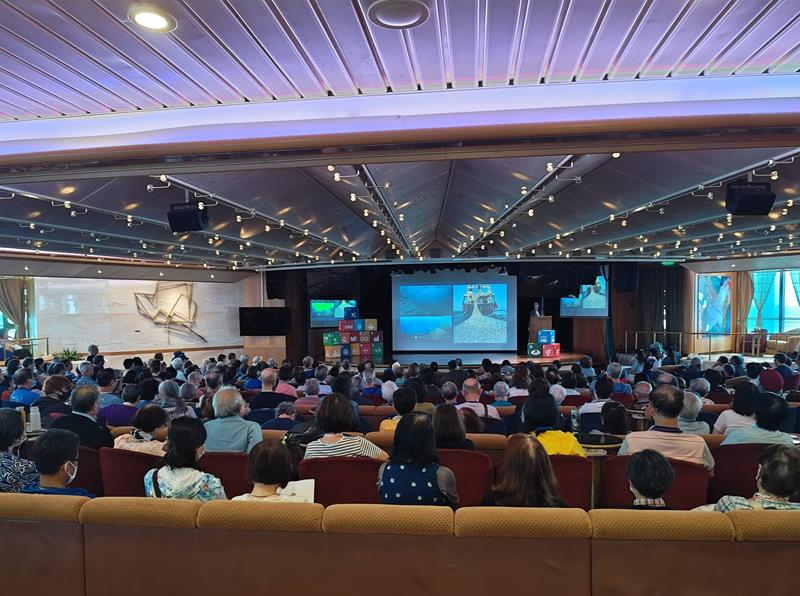
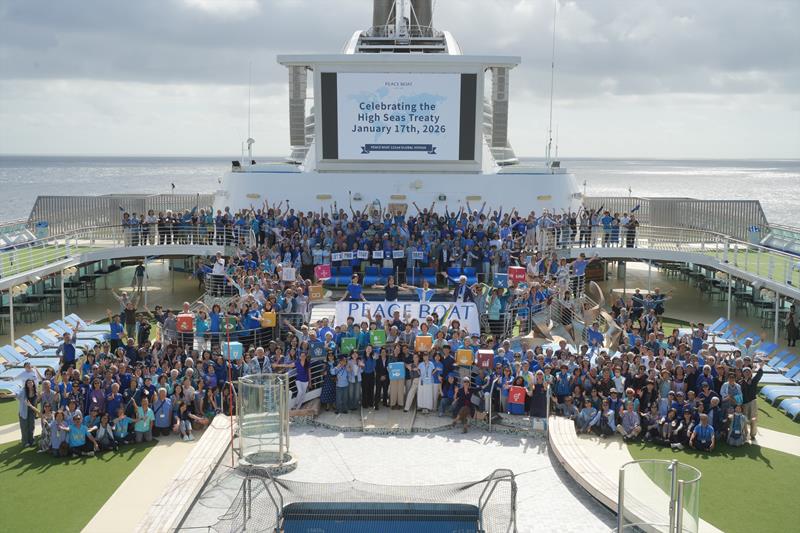
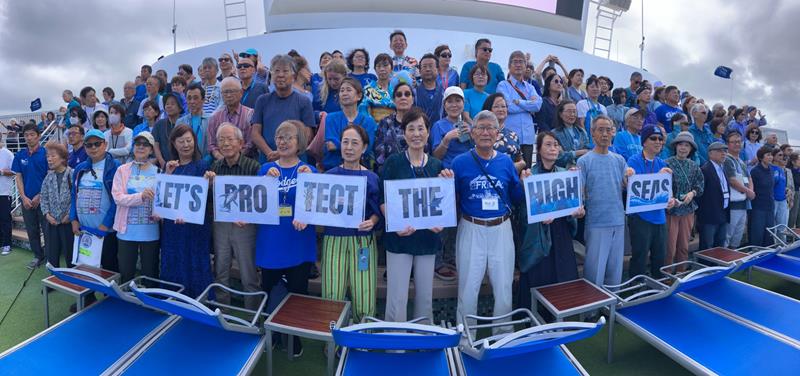
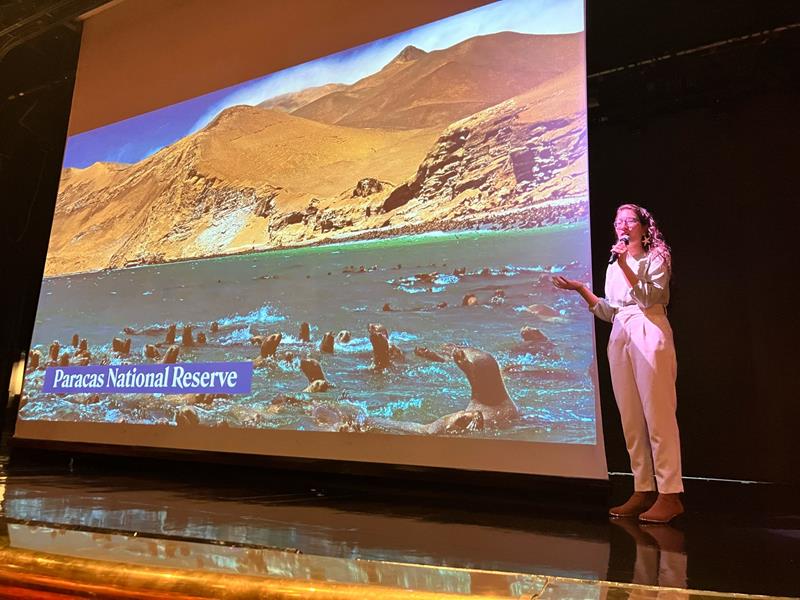
To commemorate this historic occasion, passengers gathered onboard wearing blue, reflecting a shared commitment to our ocean. The celebration featured an inspiring lecture and discussion led by Stefanie Torres, a marine biologist and ocean educator, President of SOA Perú, and a Youth for the SDGs Scholar (Patagonia Voyage 2024).
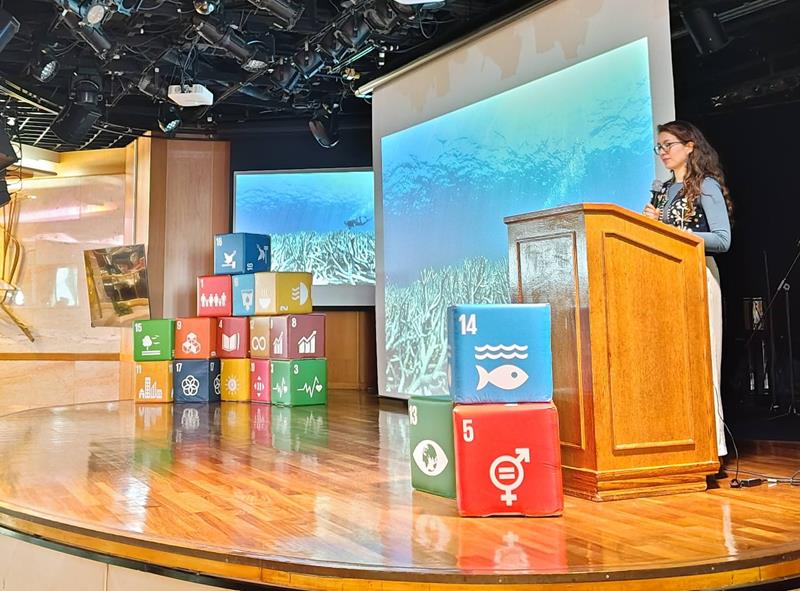
Stefanie is dedicated to empowering young leaders and coastal communities to protect the ocean, with a strong focus on marine protected areas, climate advocacy, and small-scale fisheries. She has represented youth voices in major global decision-making spaces, including the UN Ocean Conference, the UNFCCC (COP27 and COP28), the 2024 UN Biodiversity Conference (CBD COP16), and the International Seabed Authority Assembly, where she has contributed to youth statements and negotiations on critical ocean governance issues. In Peru, her advocacy has helped secure concrete outcomes, including the creation of the Mar Tropical de Grau Reserve and a national call for a moratorium on deep-sea mining. She has also co-developed youth volunteer programs and innovative marine education initiatives that connect science, policy, and local knowledge. Through ocean literacy, storytelling, and creative engagement, Stefanie works to inspire and equip the next generation of ocean stewards.
The event concluded with a commemorative photo action on the top deck, capturing a shared moment of hope, responsibility, and collective resolve.
Witnessing the High Seas Treaty enter into force while navigating the high seas ourselves served as a powerful reminder that protecting the ocean requires global cooperation. This historic agreement is not an endpoint, but a beginning — one that calls on governments, civil society, and individuals alike to turn commitment into action, for the ocean and for future generations.