From the Ship
Peace Boat’s Global Voyage Connects Chile to International Ocean Governance and Blue Innovation
Peace Boat’s 122nd Global Voyage made significant stops in two Chilean ports, Valparaiso (January 26) and Punta Arenas (January 31 - February 1), hosting a series of high-level programmes focused on ocean education, maritime culture, science, art, and blue innovation. The timing of these events was especially important, following the entry into force of the United Nations High Seas Treaty, or Biodiversity Beyond National Jurisdiction (BBNJ) Agreement, on January 17, 2026, reaffirming Peace Boat’s strong support for international ocean governance.
Valparaiso: Sailing Toward the BBNJ Agreement
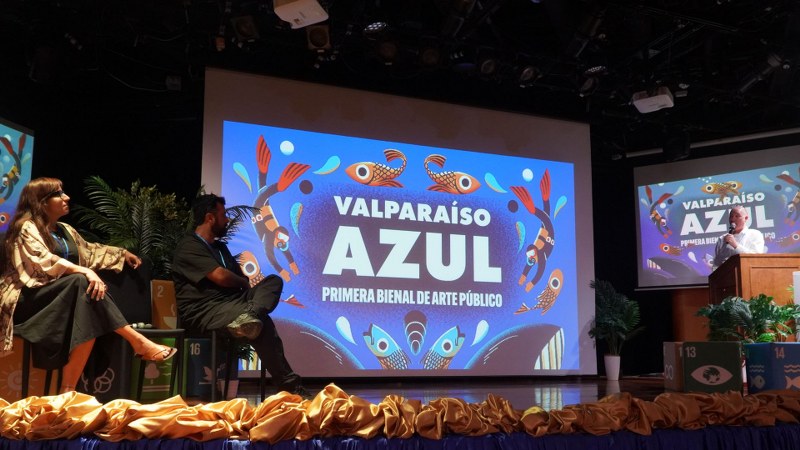
In Valparaiso, the ship’s arrival was preceded by several days of community-focused programmes on public art and ocean education. The main event, the Blue Innovation Reception, “Sailing Toward the BBNJ Agreement,” was held onboard on January 26 to celebrate Valparaiso’s bid to host the BBNJ Agreement Secretariat.
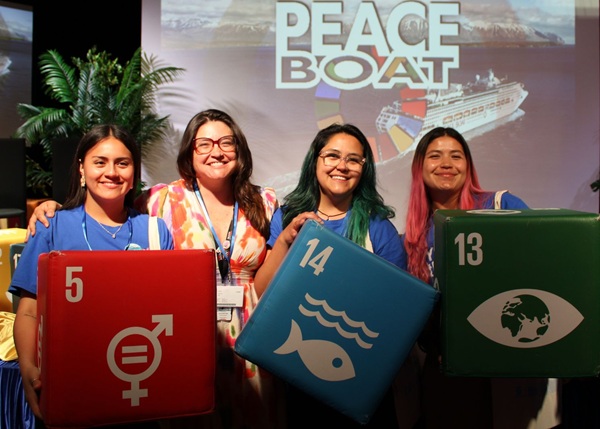
The reception successfully convened members of the Chilean government, including Senator Ricardo Lagos Weber, ocean experts, youth representatives from the SDGs programmes, non-profit organizations, and artists. Discussions centered on timely themes such as climate action and the blue economy; blue maritime transport; ocean culture, innovation and art; and strategic partnerships for the UN Ocean Decade and BBNJ Agreement.
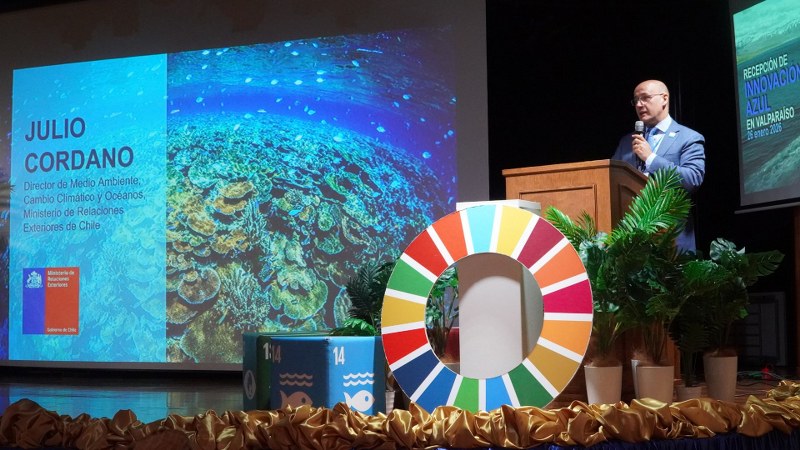
The programme concluded with a Blue Dinner featuring Chile’s Minister of the Environment, Maisa Rojas, who stressed the necessity of multisectoral collaboration to advance ocean protection. Collectively, these activities strengthened the link between science, public policy, and culture, fostering a shared commitment to the ocean’s future.
Punta Arenas: Conservation of Antarctica and the Southern Ocean
After sailing down the coast of the continent, Peace Boat docked in Punta Arenas, the gateway to Antarctica. On Sunday, February 1, 2026, the Blue Innovation Reception for the Conservation of Antarctica was held onboard, aligning with Peace Boat’s contributions to the UN Decade of Ocean Science for Sustainable Development (2021–2030) and the UNESCO-promoted International Year of Glaciers’ Preservation.
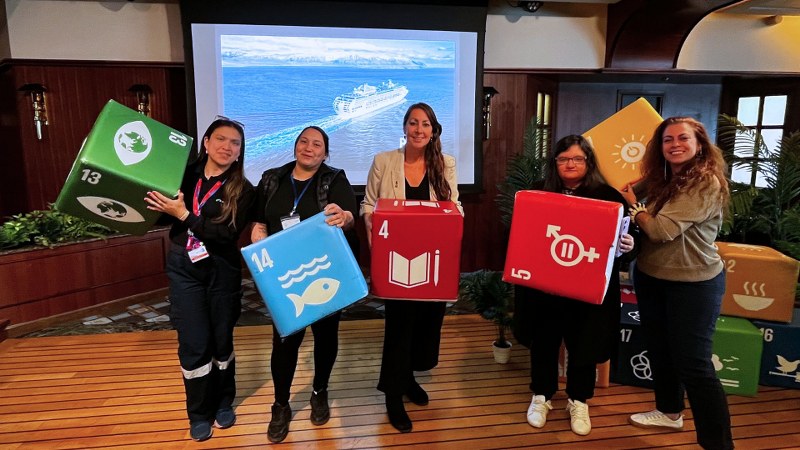
The programmes highlighted the conservation of Antarctica and the Southern Ocean, integrating biocultural science, environmental education, youth leadership, women’s inclusion in the maritime-port sector, and regional cooperation.
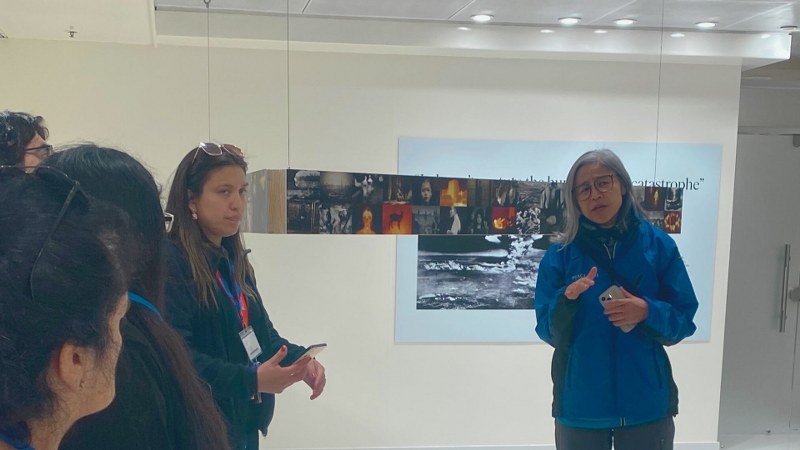
The day began with a special tour of the outreach edition of the Nobel Peace Center’s Exhibition, “A Message to Humanity,” introducing the work of Nihon Hidankyo, recipient of the 2024 Nobel Peace Prize. The exhibition invited reflection on memory, resilience, and nuclear disarmament, reinforcing the interconnectedness of peace, life, and sustainability.
“It is deeply moving to learn about such a dehumanizing event through such a profoundly human perspective,” commented participant Eduardo Ulises Barros González.
The subsequent onboard programme featured prominent regional speakers, including Eduardo Ulises Barros González from the Centro Internacional Cabo de Hornos (CHIC) and Fundación Omora, who presented a biocultural perspective on the relationship between communities and nature. Eduardo Velásquez of the Planeko project shared his work on sound art for environmental awareness.
The event also saw the participation of women from the inclusion programme in the maritime-port sector led by Fundación Mascarona, which promotes gender equality and women’s leadership roles. Local actors from Fundación Lenga and the Universidad de Magallanes Conservatory of Music also contributed to the dialogue.
The day underscored the convergence of science, culture, and international cooperation, highlighting the crucial role of Antarctica and the Southern Ocean as fundamental pillars for global climate action and a sustainable Ocean.