

From the Ship
Learning About Landmines in Cambodia: A Report from Voyage 121
During Peace Boat’s 121st Global Voyage, a specialized study tour was held to examine the ongoing landmine crisis in Cambodia. Twenty-two participants, ranging in age from their 20s to 80s, visited the country to engage with demining organizations, NGOs supporting landmine survivors, and villages where Peace Boat has provided long-term assistance. This report highlights the visit to the Landmine Museum and a return to a primary school built with Peace Boat's support two decades ago.
Understanding the Scale: The Cambodia Mine Action Centre (CMAC)
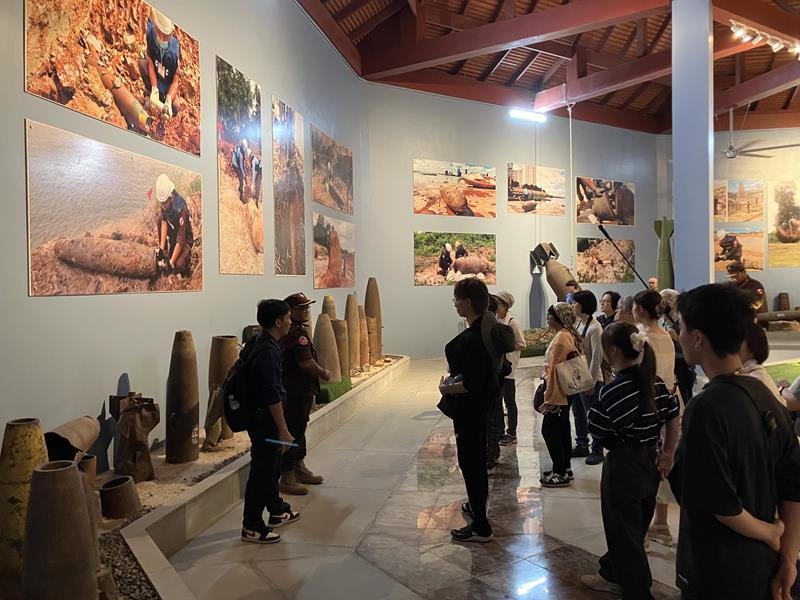
The tour visited the museum of the Cambodia Mine Action Centre (CMAC), a government agency leading demining and unexploded ordnance (UXO) clearance. Currently under expansion, the facility aims to be reopened as the world’s largest landmine-related museum by July 2026. Participants toured the completed sections, viewing a vast array of landmines, cluster bombs, and artillery shells left behind from the civil war era.
The urgency of CMAC's work was underscored by recent events: just one month prior to the visit, in July 2025, military clashes near the Thai-Cambodia border created new threats from unexploded ordnance. This served as a sobering reminder that even as old mines are cleared, new dangers can emerge. While the demining process for landmines may reach completion in a few years, experts noted that clearing unexploded ordnance will take much longer. Today, Cambodia is transitioning from a "recipient of aid" to a global leader in demining technology, providing technical expertise to countries like Ukraine and Colombia.

From Minefields to Classrooms: 20 Years of Koh Ker Primary School
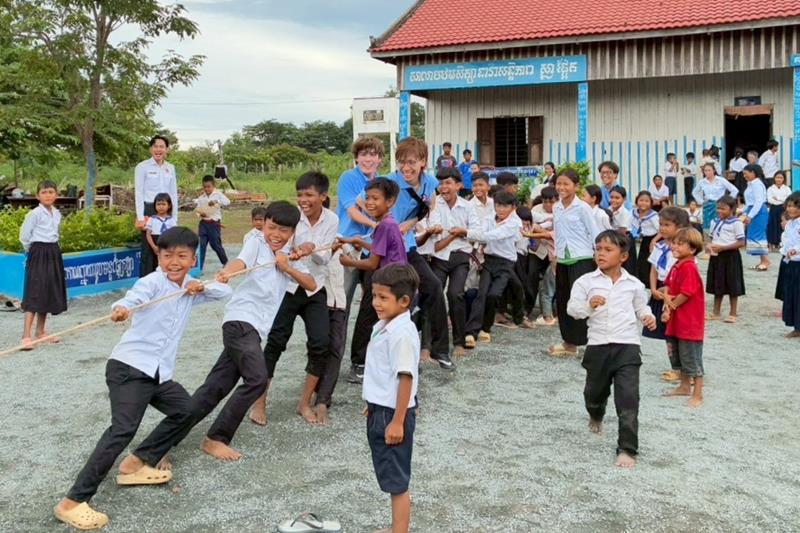
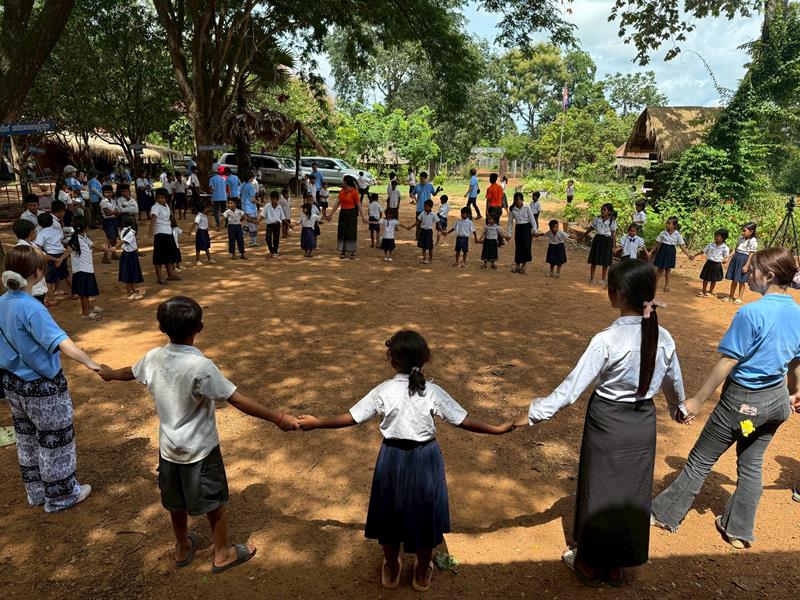
The group also visited Koh Ker Primary School, established in 2005 through Peace Boat’s Landmine Abolition Campaign (P-MAC). Before the school could be built, 14 landmines and two unexploded shells had to be cleared from the site. Today, it serves approximately 200 children. Participants spent time playing origami and ball games with the students and observed classes in Khmer and mathematics.
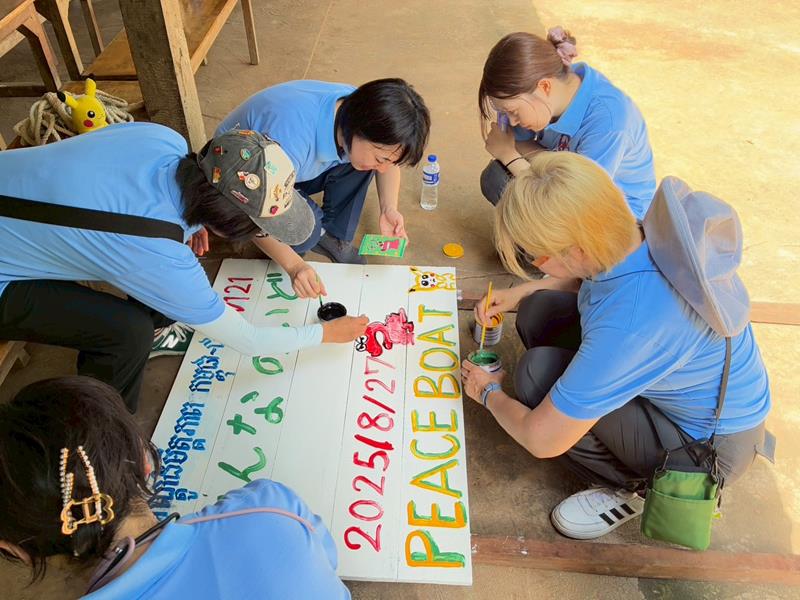
A particularly moving moment occurred at the school's well, which was donated by Peace Boat in 2007. Eighteen years ago, tour participants and local children had created a wooden sign for it titled "Everyone’s Well." During this visit, Peace Boat staff member Oshita Keisuke —who was one of the original participants who made that sign—joined current students to repaint and restore the aging marker. "Seeing that the well has been cared for so long, and that they kept the sign even as it weathered, is truly heartening," Oshita remarked.
Looking Forward: Sustaining the Future
As Koh Ker Primary School approaches its 20th anniversary, new challenges have surfaced. The tropical climate has taken a toll on the original buildings, and a growing student population has led to a shortage of classrooms. While the school is a public institution, government budgets are limited, and funding for major repairs or new construction remains scarce.
Although the immediate vicinity of the school is mine-free, active demining sites remain just a 10-minute drive away. The tour concluded with a deep realization among participants: landmine abolition is not just about the technical act of removal, but about a long-term commitment to the local communities of the area.

Support the Landmine Abolition Campaign (P-MAC)
P-MAC continues to support demining efforts, primary schools, and landmine survivors in Cambodia. These activities are made possible through your generous donations.
