

From the Ship
From the Ocean to Rapa Nui: A Musical Journey with Mahani Teave and a Visit to Toki Music School
Peace Boat was deeply honored to welcome renowned pianist and humanitarian Mahani Teave as a Guest Educator during the 122nd Global Voyage. Sailing with the ship from Yokohama across the Pacific to her ancestral home of Rapa Nui, she offered participants a rare opportunity to engage with the island’s culture, history, and future through music, storytelling, and environmental advocacy.
Through a series of moving piano concerts, film screenings of her documentary Song of Rapa Nui, and lectures on cultural and environmental stewardship, she shared her journey as both an internationally acclaimed musician and an advocate for her community. Described by BBC Music Magazine as possessing “natural pianism” and “magnificent artistry,” her debut album reached the top of the classical charts on the Billboard rankings and earned international recognition. Onboard, however, her focus extended beyond performance. Her talks encouraged passengers to look beyond the iconic moai statues and discover Rapa Nui as a living culture shaped by community, history, and landscape.
She also introduced participants to the story behind Toki Rapa Nui, the island’s first music school, which she co-founded after returning home from her global performing career. As a child, Mahani had to leave Rapa Nui to pursue classical music education. Toki was created so that future generations could study both classical and traditional music without leaving their home and community. Today, the school is far more than a place for music lessons. It is a nurturing space where children explore creativity while strengthening their cultural identity.
The name “Toki,” referring to the traditional stone tool used to carve the island’s monumental moai, reflects the school’s mission to help shape the future of Rapa Nui’s youth and culture. Through interactive workshops onboard, including demonstrations of traditional kai kai string figures and dance, Mahani invited participants to experience the living traditions of Polynesian culture.
Toki also stands as a remarkable example of ecological innovation. Built over seven years using recycled materials such as tires, glass bottles, and aluminum cans, the school follows Earthship design principles to create a self-sufficient learning environment. Rainwater is harvested, renewable energy powers the campus, and gardens and orchards provide food, offering practical solutions for sustainability in a remote island setting.
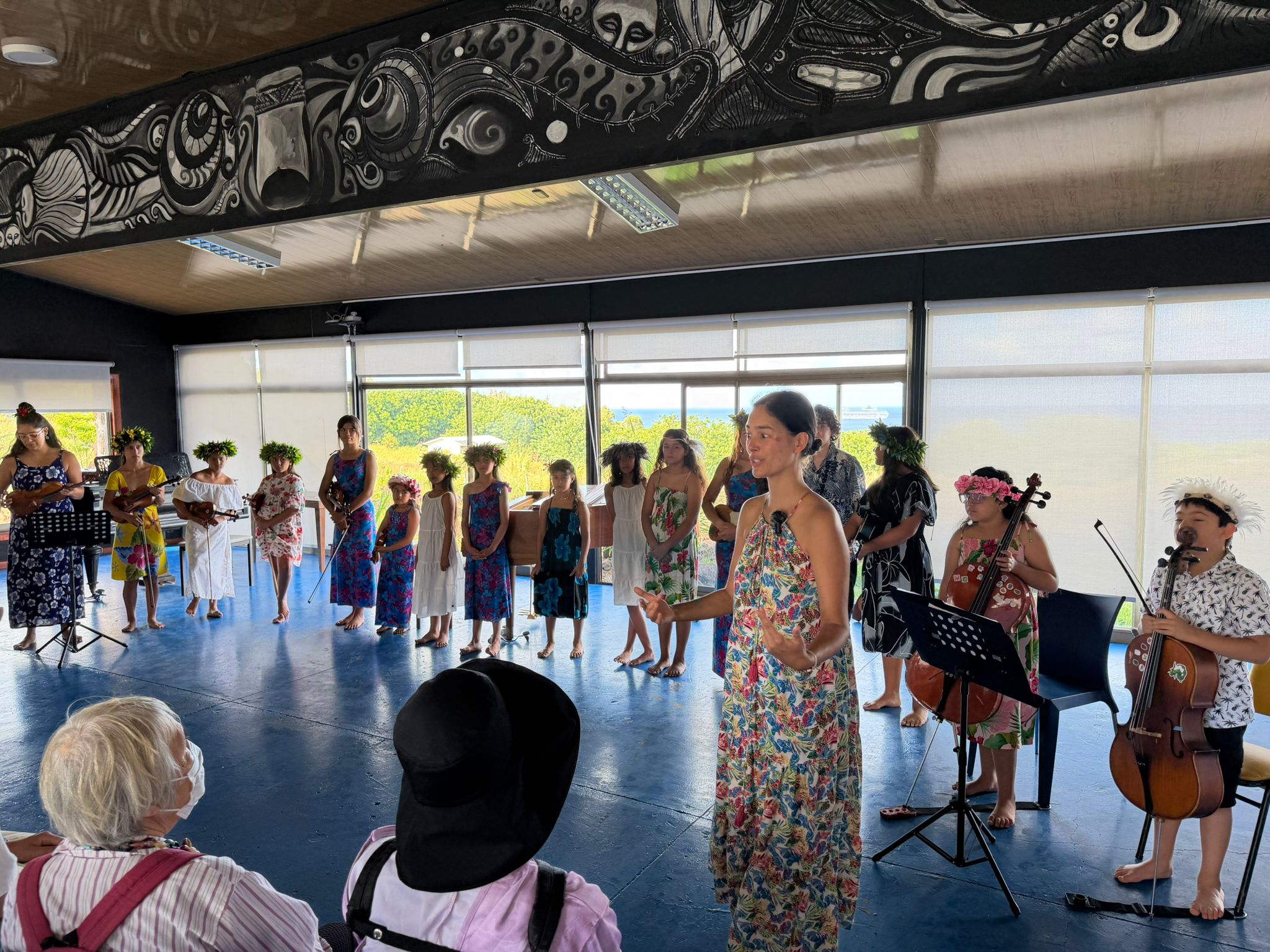
After weeks of learning from Mahani at sea, participants had the opportunity to visit Toki in person during Peace Boat’s stop at Rapa Nui. Meeting the students and educators who bring the school to life allowed passengers to witness firsthand how music, culture, and community come together to shape a hopeful and sustainable future.
Mahani’s journey with Peace Boat offered far more than concerts and lectures. It created a bridge between the global stage and a small Pacific island community, reminding participants that cultural preservation, education, and care for the Earth are deeply interconnected. Through her work and vision, passengers arrived at Rapa Nui with a deeper respect for its history and a shared commitment to supporting its future.