

News
First International Conference on the Just Transition Away from Fossil Fuels: Linking Climate Justice, Peace, and a Just Transition
The First International Conference on the Just Transition Away from Fossil Fuels took place from 24–29 April in Santa Marta, Colombia, bringing together governments, civil society, academia and the private sector to advance a just and equitable transition away from fossil fuels. Convened by the governments of Colombia and the Netherlands, the conference marked an important shift in global climate discussions. In contrast to the UNFCCC process, which has largely focused on emissions, Santa Marta placed the spotlight on fossil fuels themselves, highlighting the need for a managed phase-out of production.
Peace Boat engaged across both official and civil society spaces, emphasising the connections between fossil fuels and militarism. In the lead-up, we participated in online dialogues with the Women and Diversities sector, contributing to discussions on gender justice, equity, and systemic change. These exchanges highlighted that a just transition must prioritise care, justice, and intersectionality, and address the root causes of inequality. Read the A Feminist Vision Statement for the Transition Away from Fossil Fuels Conference HERE
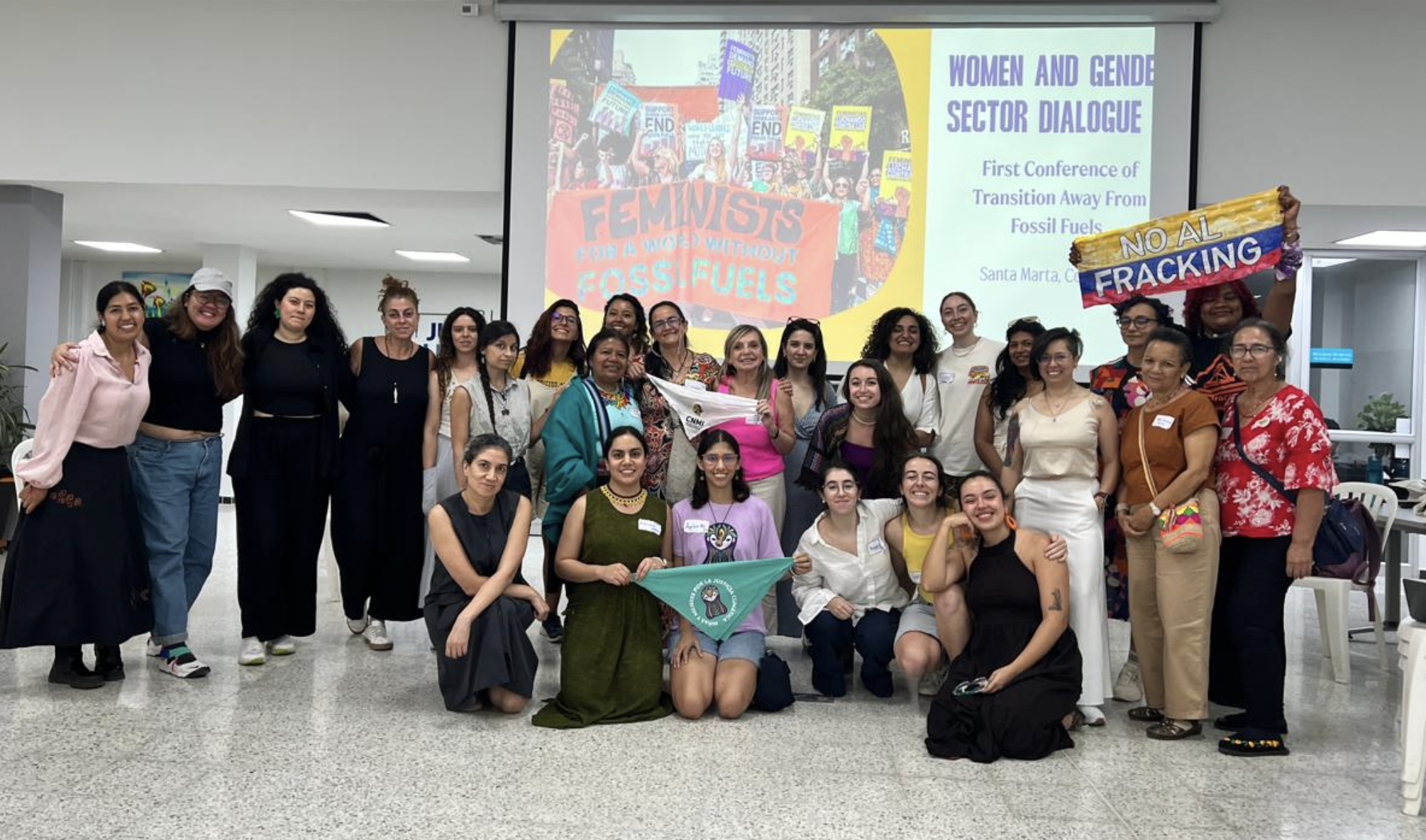
In Santa Marta, Peace Boat also took part in in-person dialogues and the People’s Summit, where a global coalition of civil society organisations, Indigenous Peoples, frontline communities, women, youth, and workers launched the People’s Declaration for a Rapid, Equitable, and Just Transition. The declaration frames the climate crisis as rooted in systems of capitalism, colonialism, and militarism, and calls for transformative change. It also clearly rejects nuclear power as a false solution in the just transition. Read the People's Declaration HERE:
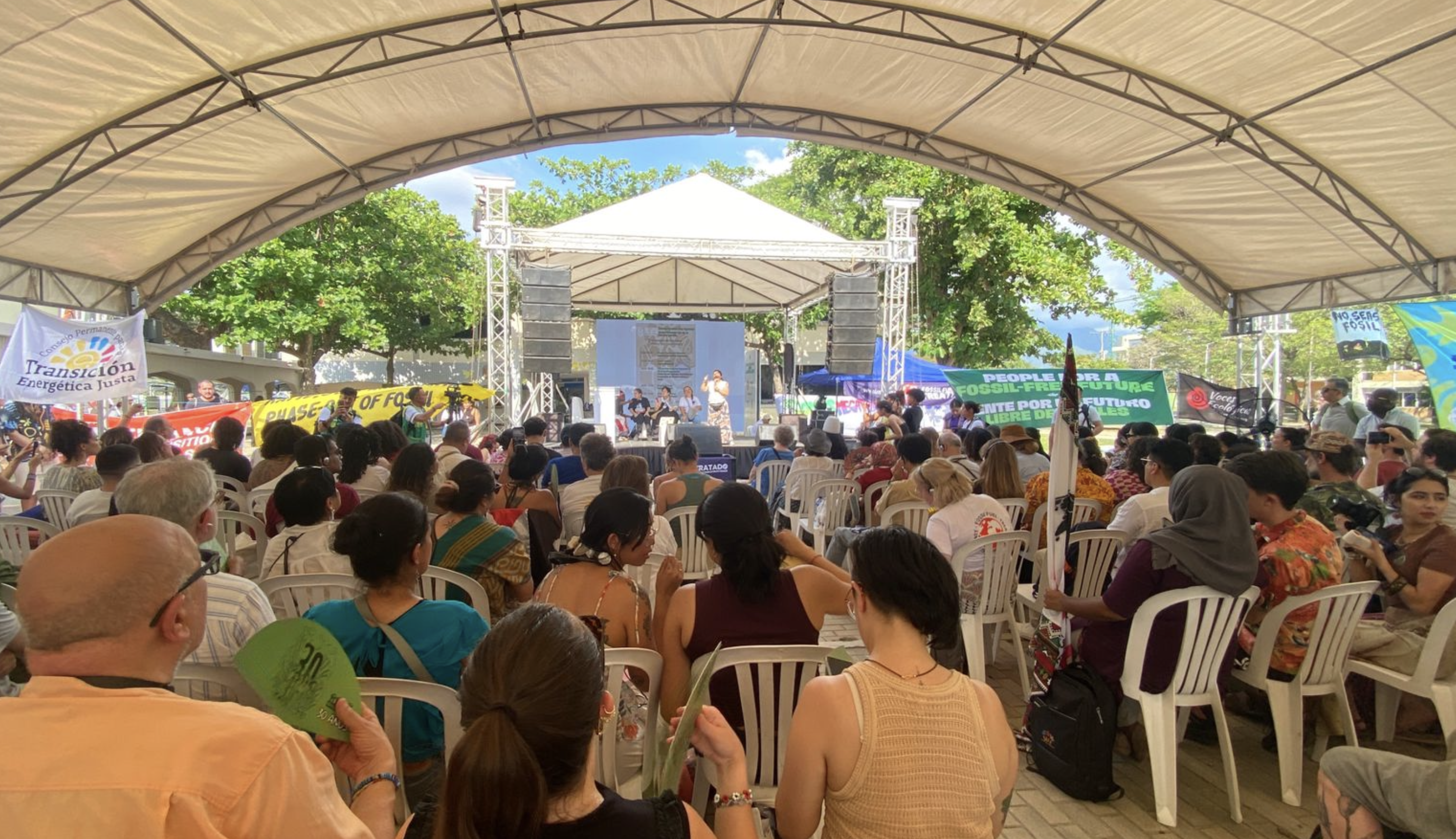
Across these spaces, a clear message emerged: we cannot end our dependence on fossil fuels without transforming the systems that sustain them. Extractivism and militarism are deeply intertwined, prioritising violence, control, and profit over care, justice, and community.
Fossil Fuels, Militarism, and the Path to Peace
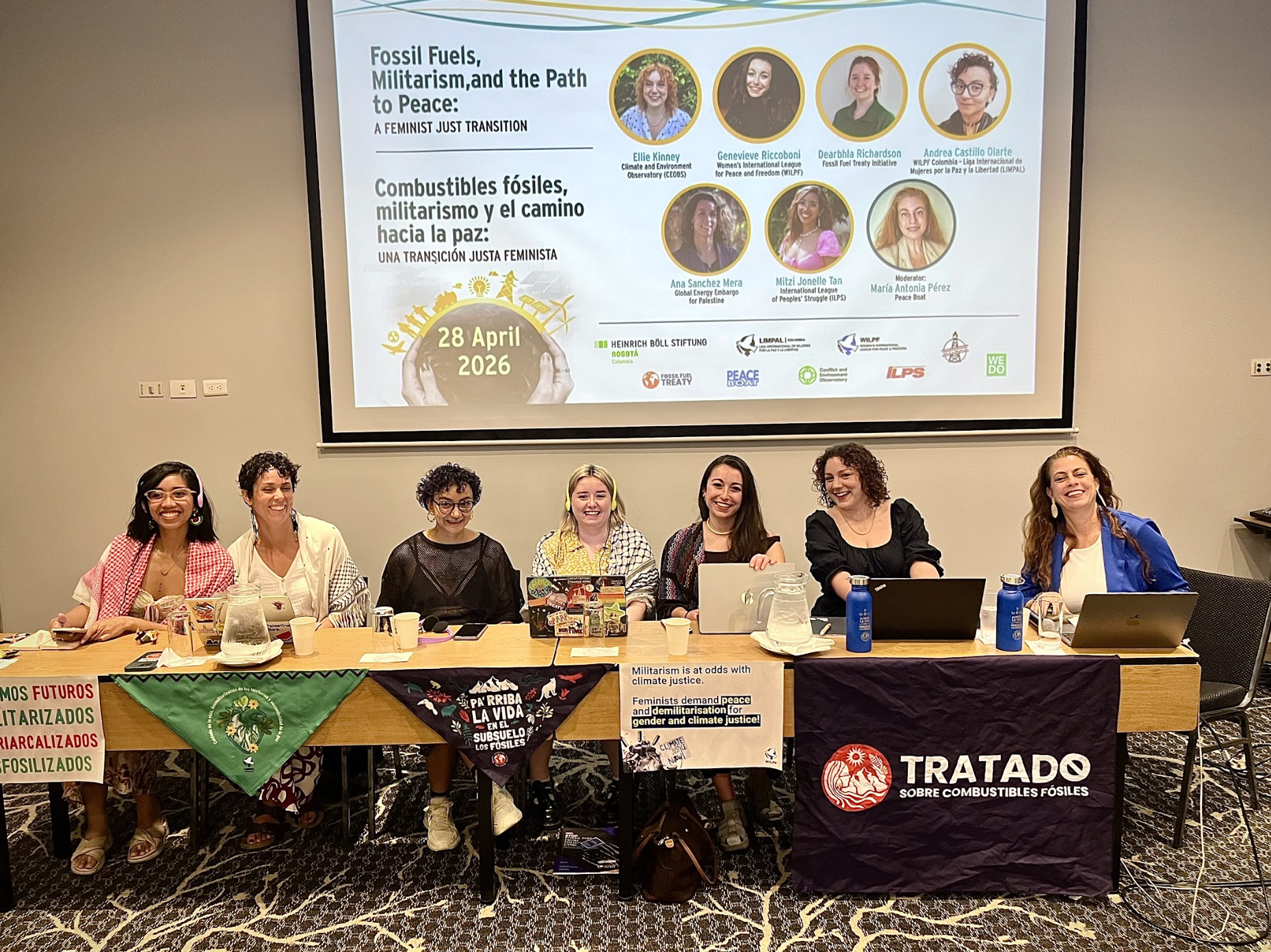
This perspective was brought into focus through a side event on 28 April co-organised by Peace Boat, the Women’s International League for Peace and Freedom (WILPF), and the Fossil Fuel Treaty Initiative, with support from the Heinrich Böll Foundation Bogotá, and in collaboration with the Conflict and Environment Observatory (CEOBS), LIMPAL Colombia, the Global Energy Embargo for Palestine, the International League of Peoples’ Struggle, and the Women’s Environment and Development Organization (WEDO).
Held as part of the Global Days of Action on Military Spending (GDAMS), just one day after new data from the Stockholm International Peace Research Institute (SIPRI) confirmed record global military spending, the event explored why demilitarisation is essential to a just transition.
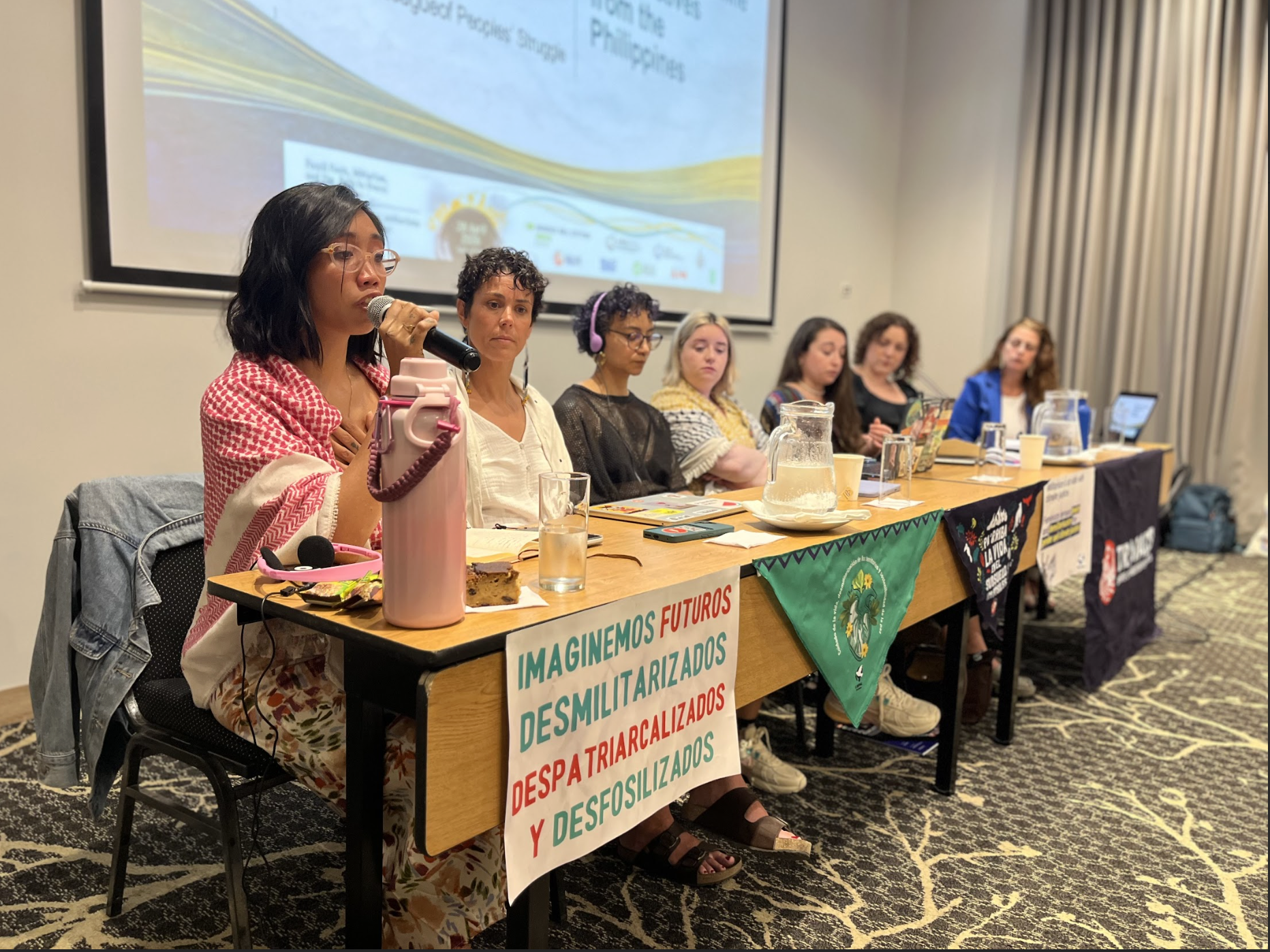
The discussion brought together diverse voices from across regions and movements. Ellie Kinney of the Conflict and Environment Observatory (CEOBS) highlighted the scale of military emissions and the lack of accountability within international climate frameworks. Dearbhla Richardson of the Fossil Fuel Treaty Initiative emphasised the role of the Fossil Fuel Treaty as a pathway not only to climate justice but also to peace, by addressing key drivers of conflict. Genevieve Riccoboni of WILPF presented findings from the newly launched Double Dividend report, showing how reducing military spending could help finance a just transition. Andrea Castillo Olarte of LIMPAL Colombia brought a national perspective on the intersections of conflict, extractivism, and feminist peacebuilding. Ana Sanchez spoke about fossil fuels are fueling the genocide in Palestine and calls for an Global Energy Embargo on Israel which Peace Boat also supports. Mitzi Jonelle Tan spoke about the militarised impacts of extractivism and frontline perspectives from the Philippines where environmental defenders had been killed only days earlier in Toboso, Negros Occidental. The room had a moment of silence for the lives lost to genocide, miltiarism and fossil fuels extractivism. The discussion was moderated by Maria Antonia Perez of Peace Boat, who framed the conversation through a feminist lens, highlighting how militarism operates as a system that prioritises domination, extraction, and control over care and justice.
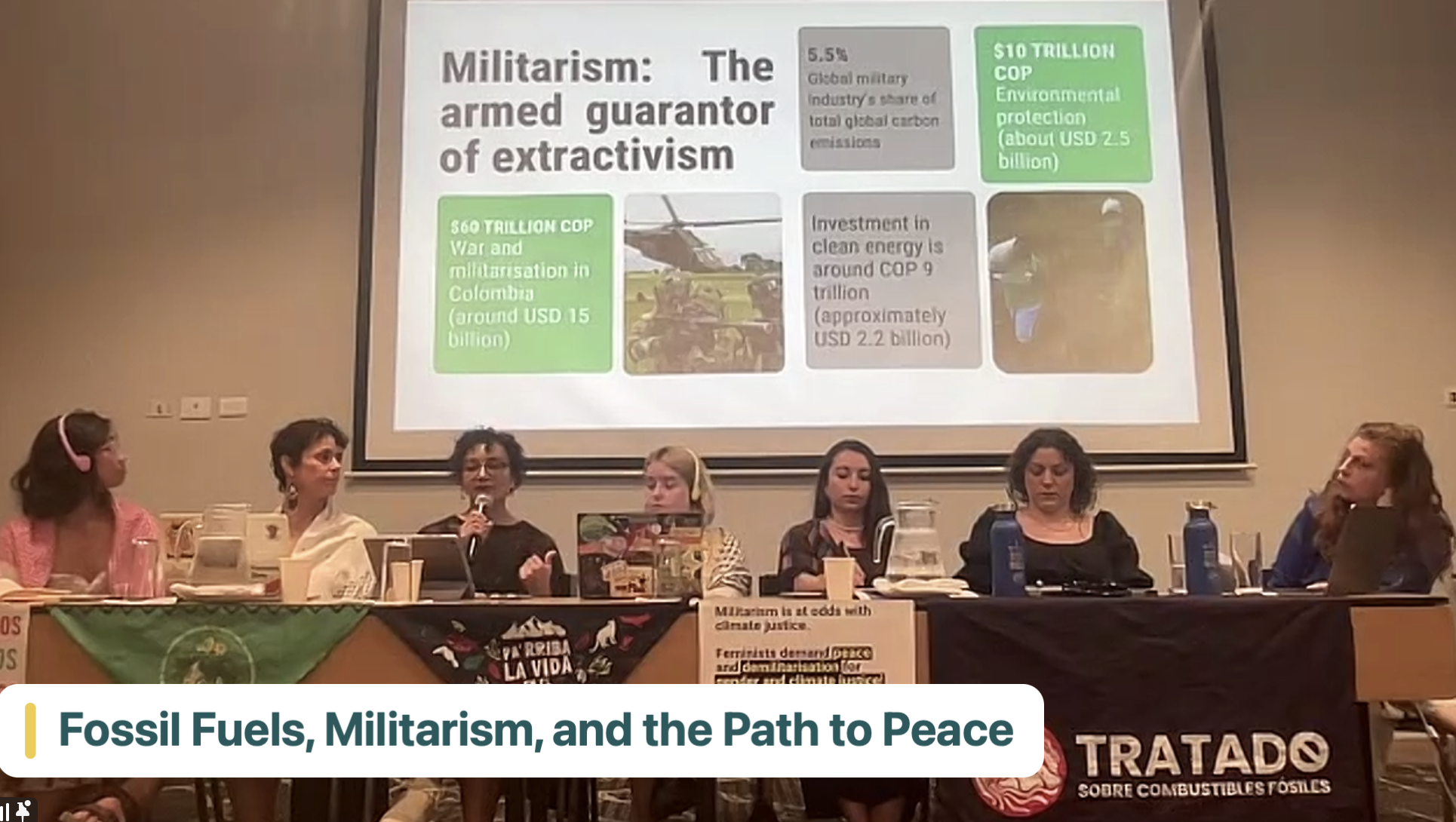
Across the discussion, speakers underscored how militarism and fossil fuels are deeply interconnected. Military institutions are major consumers of fossil fuels, while military spending diverts vast public resources away from climate action and social needs. At the same time, rising military expenditure increases geopolitical tensions and the risk of conflict, while benefiting private arms and fossil fuel industries. A clear message emerged: demilitarisation is not a peripheral issue, but essential to achieving a just transition.
The Double Dividend report, developed by WILPF and the Fossil Fuel Treaty Initiative, further demonstrates that even a small reallocation of global military spending could significantly contribute to closing the climate finance gap and investing in what truly provides security — food, water, health, and dignity. The report is available here: https://www.fossilfueltreaty.org/double-dividend-pr
The event was livestreamed as a Zoom webinar and the full recording can be viewed on Youtube and below Subtitles in Spanish and English will be added soon.
Throughout the conference, the Fossil Fuel Treaty emerged as a key framework for international cooperation, complementing the Paris Agreement by addressing fossil fuel production and enabling a fair phase-out. Peace Boat is proud to support the Fossil Fuel Treaty Initative as a tool for climate justice and peace.
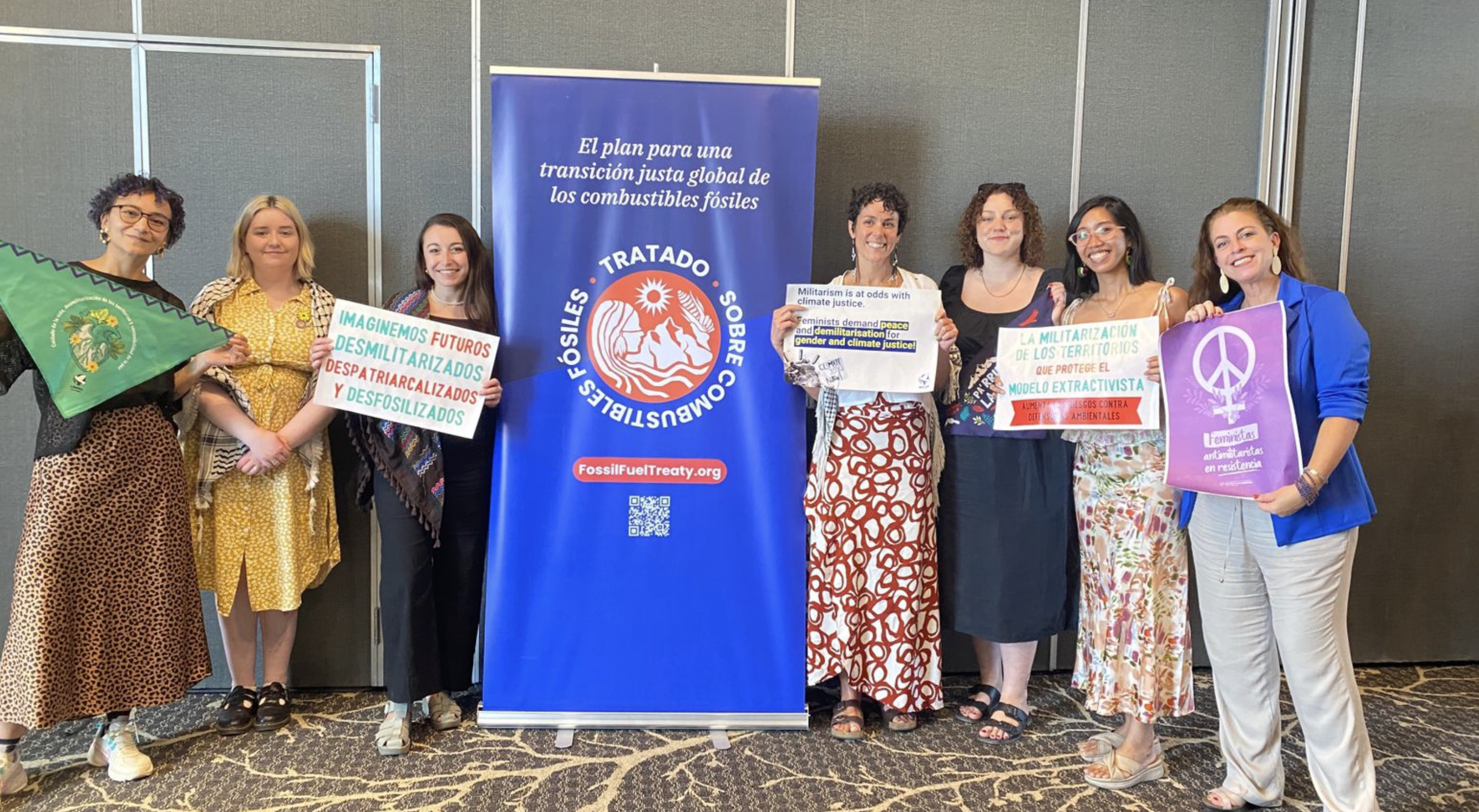
Linking Climate and Disarmament Movements
On 27 April, Peace Boat took part in a link-up between activists in Santa Marta and those gathered in New York during the Nuclear Non-Proliferation Treaty (NPT) meetings, facilitated by Warheads to Windmills. The exchange explored parallels between disarmament processes and the Fossil Fuel Treaty, which has drawn inspiration from the disarmament movement, particularly the Treaty on the Prohibition of Nuclear Weapons.
The discussion also addressed nuclear energy, often promoted in UNFCCC spaces as a climate solution, and its close links to militarism. Civilian nuclear power and nuclear weapons share technologies, materials, and infrastructure, including uranium enrichment and plutonium production, creating ongoing proliferation risks and reinforcing military systems. Participants highlighted that nuclear energy remains deeply extractive and unequal, with uranium mining and radioactive waste disproportionately impacting Indigenous peoples and frontline communities. The exchange reinforced a shared vision of a fossil-free and nuclear-free future, and the need to shift resources from systems of destruction to those that sustain life.
Looking Ahead
The conference marked a powerful shift, from questioning whether we should move away from fossil fuels to actively designing how to do it, centering justice, indigenous leadership, and the voices of the Global South. It became a space where emotion, science, and storytelling converged, where testimonies remind us that this transition is not only technical, but deeply human and political. Countries, movements, and organizations aligned around the need for concrete pathways: national transition roadmaps, financial system reform, and stronger international cooperation to move beyond fossil fuels in a just and equitable way.
The current global context, marked by ongoing conflicts and geopolitical tensions, has reshaped how we understand energy, exposing the deep entanglement between oil, power, and war. Peace Boat’s engagement in Santa Marta highlighted the importance of linking climate justice, peace, and demilitarisation. As momentum builds toward the next conference in Tuvalu, we will continue working with partners to advance a just transition that addresses the root causes of both climate breakdown and conflict, and that prioritises care, justice, and human security.