News
Peace Boat Programmes Featured in New Springer Nature Publication on Ocean Literacy and the UN Ocean Decade
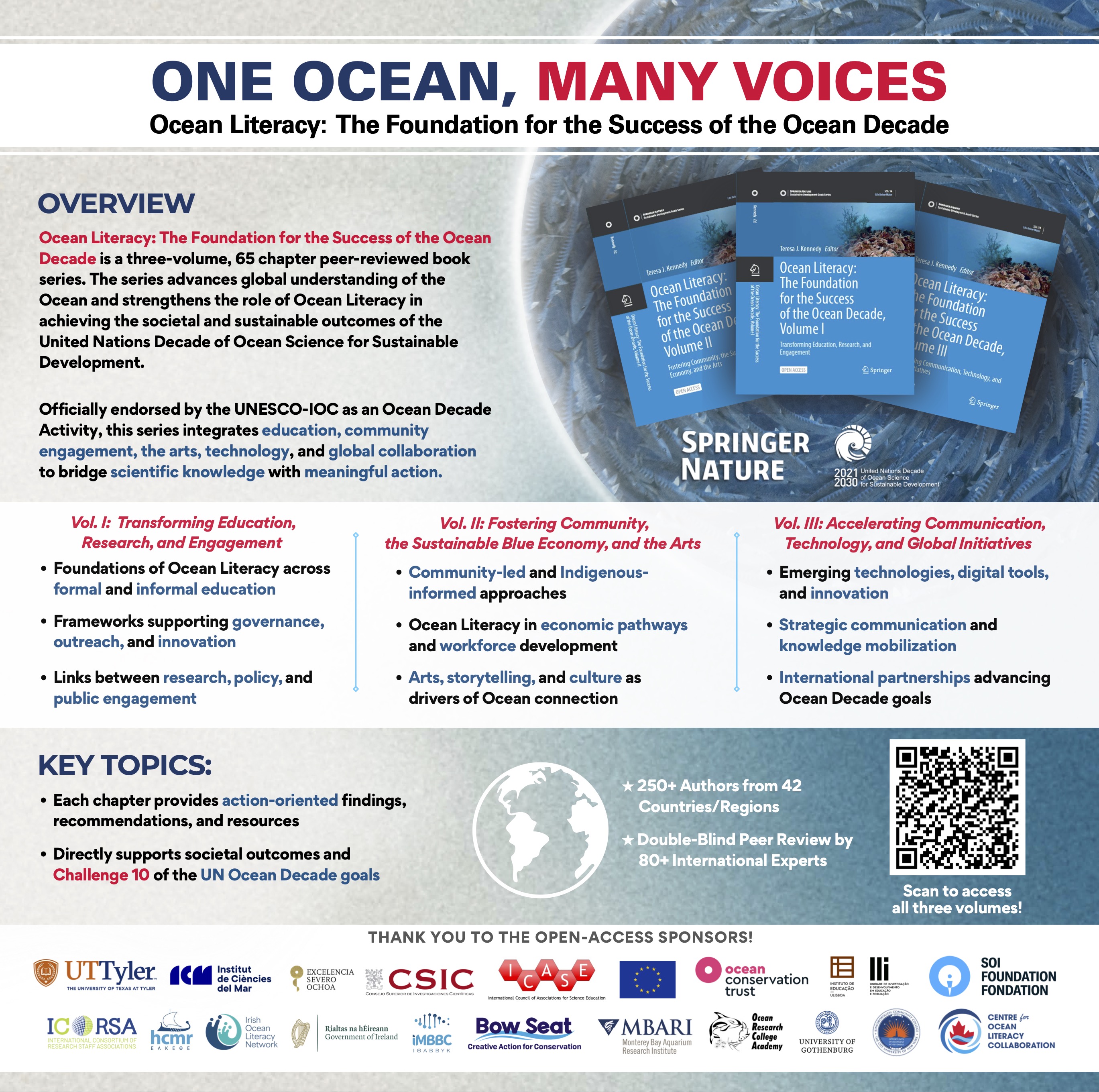
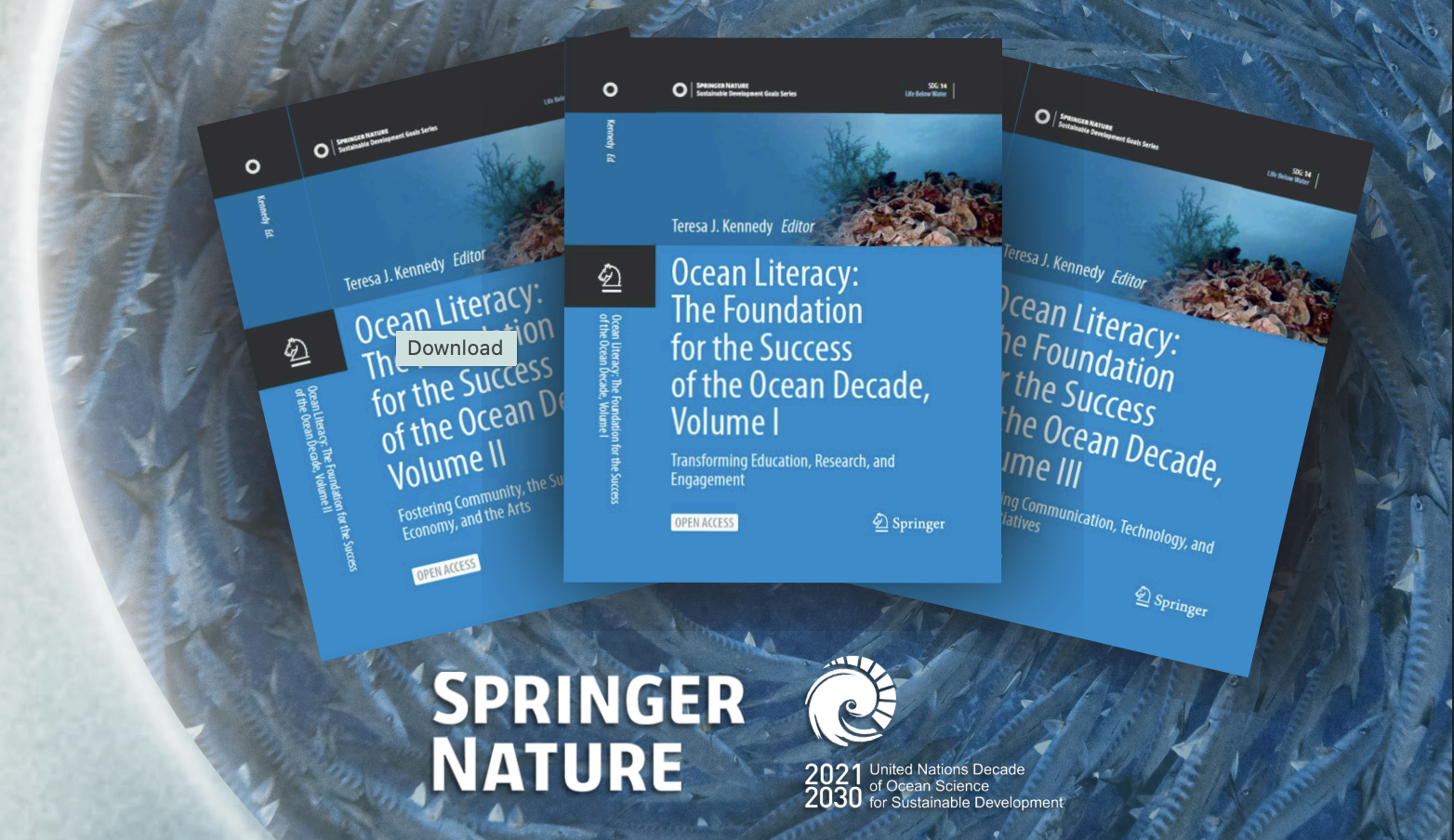
Peace Boat is proud to announce the publication of a new academic chapter highlighting its Ocean Literacy and youth empowerment initiatives in the newly released Springer Nature volume Ocean Literacy: The Foundation for the Success of the Ocean Decade.
Published by Springer Nature as an open-access academic publication, the book brings together contributions from more than 250 authors across 42 countries and regions. All chapters underwent double-blind peer review by more than 80 international experts. The publication directly supports the societal outcomes and Challenge 10 goals of the United Nations Decade of Ocean Science for Sustainable Development (2021–2030), which focuses on strengthening humanity’s relationship with the Ocean.
Peace Boat extends sincere thanks to all programme participants, alumni, guest educators, local partners, communities, and supporters who contributed to the initiatives featured in this publication and continue advancing Ocean Literacy and youth-led action around the world.
Peace Boat’s Contribution
The Peace Boat chapter, titled Peace Boat: Navigating Ocean Literacy Through Global Voyages, examines how Peace Boat’s educational voyages serve as platforms for experiential learning, Ocean advocacy, youth leadership, and global citizenship education. The chapter focuses on Peace Boat’s Ocean and Climate Youth Ambassador Programme and Youth for SDGs for the UN Ocean Decade initiatives, exploring how these programmes connect peace education, sustainability, and Ocean action through global voyages onboard Peace Boat’s ship.
The chapter situates these initiatives within the broader framework of the Sustainable Development Goals (SDGs) and the UN Ocean Decade, highlighting the interconnectedness between SDG 14: Life Below Water and a range of other global goals including climate action, quality education, gender equality, sustainable communities, peacebuilding, and global partnerships.
Ocean Literacy Through Peace Education
A central theme throughout the chapter is the strong connection between Peace Boat’s Ocean Literacy initiatives and its longstanding philosophy of peace education. Since its founding in 1983, Peace Boat has used experiential learning, intercultural dialogue, and firsthand testimony as tools to foster empathy, awareness of global challenges, and constructive social action. The chapter explains how these same educational principles now shape Peace Boat’s approach to Ocean Literacy.
Rather than treating Ocean Literacy only as scientific or environmental education, Peace Boat’s programmes position the Ocean within a broader framework of peace, justice, sustainability, and human interconnectedness. Participants are encouraged to understand how climate change, Ocean degradation, inequality, militarism, displacement, and environmental injustice are deeply interconnected global challenges that require collaborative and compassionate responses.
Drawing from Peace Boat’s broader educational philosophy focused on empathy, awareness of global threats, and actionable change, the chapter emphasizes that Ocean Literacy must go beyond knowledge acquisition. In line with UNESCO’s framing during the UN Decade of Ocean Science for Sustainable Development, the programmes seek to cultivate the values, attitudes, behaviors, and sense of shared responsibility necessary for long-term Ocean stewardship and collective action.
The chapter also highlights how the Ocean itself becomes a space for reflection and learning during the voyages. Living together at sea for extended periods encourages dialogue, cross-cultural exchange, and deeper awareness of humanity’s shared dependence on the Ocean and on one another. This connection between peace education and Ocean Literacy is presented as one of the defining strengths of Peace Boat’s educational model.
Experiential Learning at Sea
The publication explores how life onboard a ship can become a unique educational environment for advancing Ocean Literacy. Time spent at sea creates opportunities for workshops, lectures, peer learning, and deeper engagement with the Ocean, while port visits around the world provide hands-on learning experiences connected to local environmental and social realities.
Peace Boat’s voyages are presented as “mobile classrooms” where participants engage directly with environmental and social challenges facing communities around the world. The chapter highlights how this experiential approach encourages not only awareness and understanding, but also behavioral transformation, collective action, and long-term engagement with sustainability issues.
Youth Leadership and Small Island Developing States
A major focus of the chapter is the inclusion of youth from Small Island Developing States (SIDS), whose communities are already experiencing some of the most severe impacts of climate change and Ocean degradation. Through these programmes, youth from island nations across the Pacific, Caribbean, and Indian Ocean regions participate in global voyages, international advocacy, and collaborative educational experiences designed to strengthen leadership and amplify youth voices in international decision-making spaces.
The chapter explores how cross-cultural exchange and peer learning foster solidarity among youth leaders while strengthening collective advocacy for climate and Ocean action. By sharing lived experiences and working together across regions, participants develop stronger global networks and deeper understanding of shared environmental challenges.
Citizen Science, Sustainability and Environmental Action
The publication documents a wide range of educational activities carried out during Peace Boat voyages, including Arctic study programmes, coral reef restoration initiatives, mangrove ecosystem restoration, marine plastic pollution research, citizen science water testing, renewable energy site visits, and blue economy forums.
These activities demonstrate how direct engagement with marine ecosystems and coastal communities can deepen Ocean Literacy and strengthen participants’ understanding of the connections between environmental sustainability, social justice, and climate resilience.
The chapter also highlights the role of citizen science and communication literacy in Peace Boat’s educational programmes. Through collaborations with organizations including EarthEcho International and other partners, youth participants engage in water quality monitoring and environmental data collection that contribute to broader Ocean science initiatives connected to the UN Ocean Decade.
At the same time, filmmaking, storytelling, and media workshops help participants communicate their experiences and advocacy efforts to wider audiences, strengthening youth-led environmental communication and public engagement.
From Local Experiences to Global Advocacy
Another key theme throughout the chapter is the importance of global peer learning and solidarity. By bringing together youth from diverse regions and backgrounds, the programmes create opportunities for participants to share experiences, exchange ideas, and collaborate on solutions to shared environmental challenges.
The publication includes reflections from programme alumni from Saint Lucia, Seychelles, Trinidad and Tobago, Palau, and other regions, many of whom have continued their engagement through participation in international processes including UN Climate Change Conferences (COP), UN Ocean Conferences, Climate Week NYC, and the UN Ocean Decade Conference.
The chapter highlights how these programmes help bridge local experiences with international policy discussions, enabling youth from frontline communities to contribute directly to global conversations on Ocean conservation, climate action, and environmental justice.
Looking Toward the Future: Ecoship
The publication also looks toward the future through Peace Boat’s Ecoship project, which is presented as a model for sustainable maritime innovation and climate-conscious travel.
Designed with renewable energy technologies including solar power, wind-assisted propulsion, and energy-efficient systems, Ecoship aims to serve as a platform for Ocean education, citizen science, sustainability programmes, and international collaboration. The project reflects Peace Boat’s commitment to combining technological innovation with experiential learning, peace education, and environmental advocacy.
Open Access Publication
Through this chapter, Peace Boat’s programmes are presented as examples of how experiential learning, Ocean Literacy, peace education, and youth empowerment can contribute to global sustainability efforts and support the goals of the UN Ocean Decade.
The full open-access publication is available here:
Ocean Literacy: The Foundation for the Success of the Ocean Decade