

News
Reporting from the 2026 NPT Review Conference: Civil Society Voices for a Nuclear-Free Future
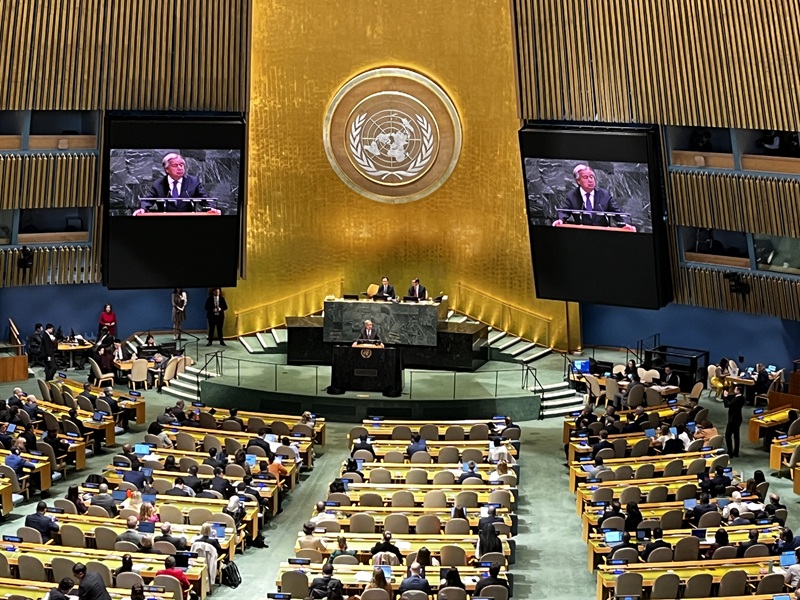
From April 27 to May 22, the 2026 Review Conference of the Treaty on the Non-Proliferation of Nuclear Weapons (NPT) was held at United Nations Headquarters in New York. Representing Peace Boat participated in the conference as part of civil society, engaging in advocacy, dialogue, and public outreach alongside organizations and activists from around the world.
While the current international security environment presents significant challenges to nuclear disarmament, the conference also highlighted the determination of governments, survivors, and civil society groups working toward a world free of nuclear weapons.
Understanding the NPT Review Conference
The NPT is the nuclear weapons treaty with the largest membership, with 191 member states. Since entering into force in 1970, it has been built upon three pillars: nuclear non-proliferation, nuclear disarmament, and the peaceful uses of nuclear energy.
Every five years, States Parties gather at the NPT Review Conference to assess progress in implementing the treaty and to negotiate future actions. The 2026 conference, chaired by Vietnam, marked the treaty's 11th Review Conference.
The month-long meeting began with a General Debate, during which more than 150 countries outlined their national positions. In the following weeks, discussions continued in three Main Committees corresponding to the treaty's three pillars. The conference concluded with negotiations over a draft Final Document, which requires consensus among all States Parties to be adopted.
Following the failure to adopt a Final Document in both 2015 and 2022, many participants viewed this Review Conference as an important opportunity to reaffirm the relevance of the NPT.
Contrasting Visions for Security
In the General Debate, sharply contrasting visions of international security were presented.
The nuclear-armed states largely defended the continued possession, modernization, and expansion of their nuclear arsenals. NATO members and other allied countries similarly emphasized nuclear deterrence as an essential component of their security policies.
At the same time, many non-nuclear-weapon states presented a very different perspective. Countries belonging to the world's six Nuclear-Weapon-Free Zones highlighted these regional arrangements as practical pathways toward disarmament. Others argued that nuclear weapons themselves constitute a threat to security rather than a guarantee of it. Small island states also drew attention to the interconnected impacts of nuclear activities and environmental degradation, particularly on the oceans.
The debates demonstrated that, despite growing geopolitical tensions, many governments continue to advocate strongly for nuclear disarmament and the elimination of nuclear weapons.
Discussions also extended beyond the size of nuclear arsenals, covering issues such as protecting nuclear facilities from military attacks, the implications of emerging technologies, and the importance of negative security assurances—commitments by nuclear-armed states never to use nuclear weapons against non-nuclear-weapon states.
The Role of Civil Society
Civil society organizations play a unique role at the NPT Review Conference. Organizations with relevant experience may participate as accredited NGOs, and Peace Boat has attended most of recent Review Conferences under this framework.
Beyond observing official negotiations, NGOs organize numerous side events throughout the conference. These sessions provide opportunities to explore issues that often receive limited attention during formal negotiations while facilitating dialogue between governments, experts, and activists.
Japanese NGOs hosted discussions on topics including youth leadership in nuclear disarmament and the scientific consequences of nuclear weapons. Organizations from other regions organized events highlighting the legacy of nuclear testing in the Pacific, testimonies from Korean atomic bomb survivors, the health impacts of uranium mining, and the importance of disarmament and non-proliferation education, among others.
These side events broadened the scope of the conference by bringing diverse perspectives into the international conversation.
Strengthening Regional Dialogue
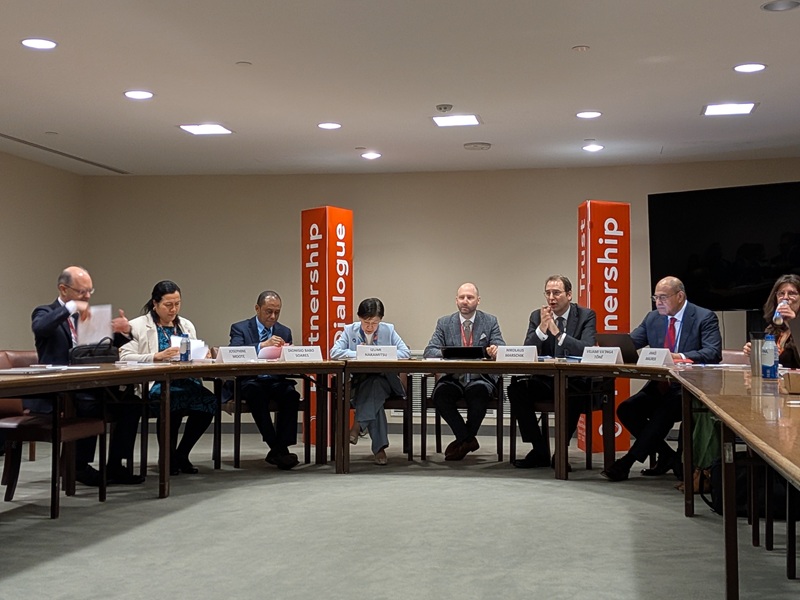
In the lead-up to the Review Conference, Peace Boat also worked to strengthen regional dialogue on nuclear disarmament in Northeast Asia. Together with the Global Partnership for the Prevention of Armed Conflict (GPPAC) Northeast Asia, the Japan Campaign to Abolish Nuclear Weapons, and the Asia-Pacific Leadership Network (APLN), Peace Boat co-convened a closed webinar that brought together experts and practitioners from across the region to discuss practical approaches for reducing nuclear risks and advancing regional cooperation.
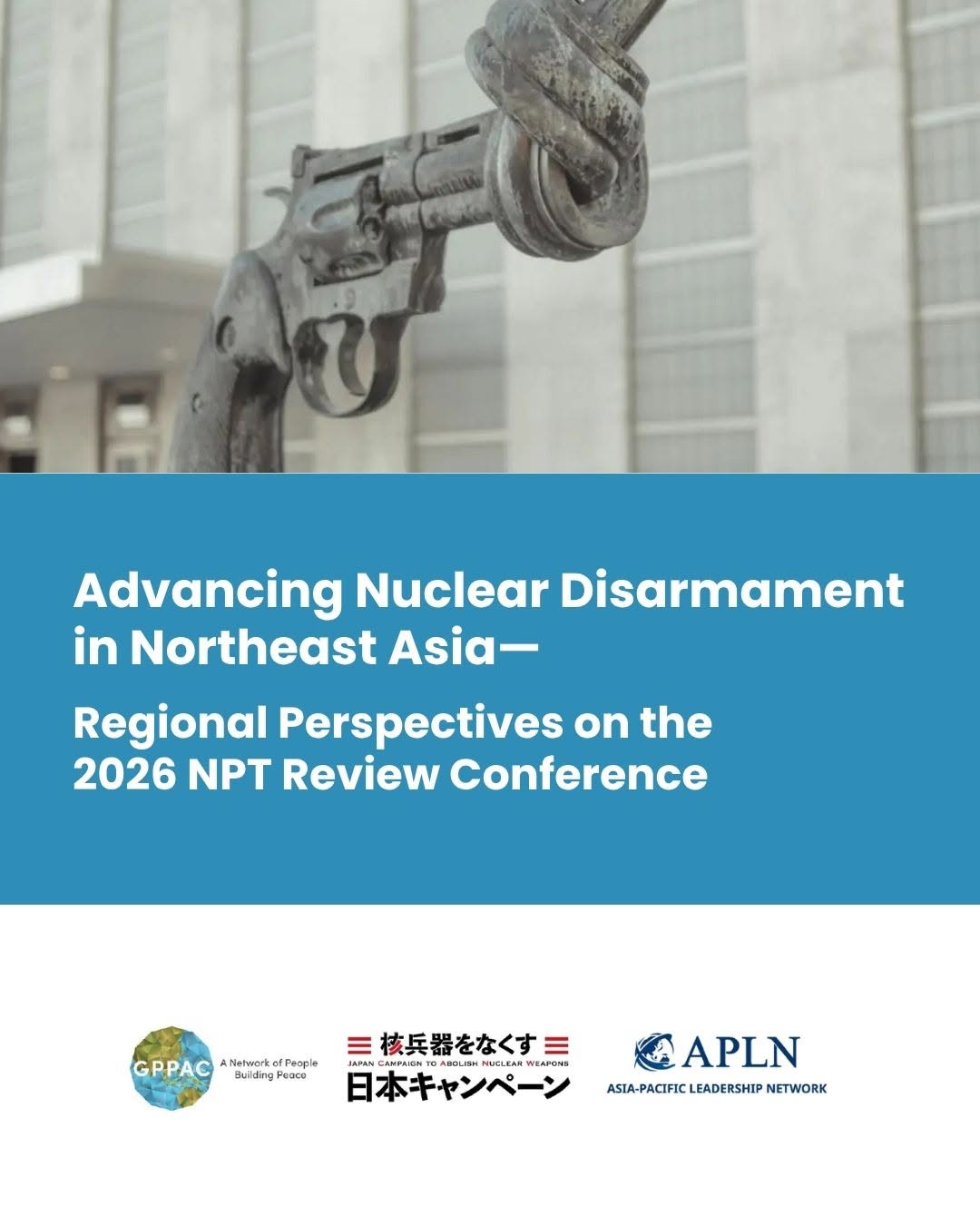
The discussions informed a joint briefing paper, Advancing Nuclear Disarmament in Northeast Asia: Regional Perspectives on the 2026 NPT Review Conference, which presents key regional perspectives and policy recommendations for governments, civil society, and other stakeholders working to address the complex security challenges facing Northeast Asia. The publication is intended to support continued dialogue and policy development beyond the Review Conference and is available as a resource for those working to advance nuclear disarmament in the region.
Sharing the Voices of Hibakusha
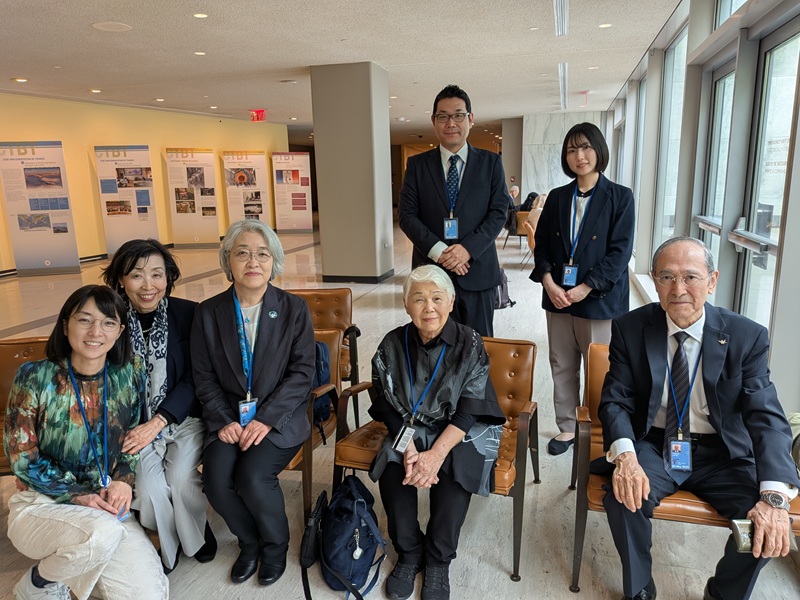
Throughout the conference, the Japan Confederation of A- and H-Bomb Sufferers Organizations (Nihon Hidankyo) organized a public exhibition at UN Headquarters, displaying photographs and artifacts from Hiroshima and Nagasaki to convey the human consequences of nuclear weapons.
Representatives also met with the conference president, senior UN officials, and diplomats from numerous countries to share the experiences of the hibakusha and advocate directly for nuclear abolition.
These meetings demonstrated how sustained dialogue and personal testimony can gradually influence diplomatic thinking over time. They also underscored the vital role that hibakusha continue to play in shaping international discussions on nuclear disarmament.
Bringing the Conference to a Wider Audience
An important objective of Peace Boat's participation was to make the NPT Review Conference and the broader issue of nuclear disarmament more accessible to the public.
In collaboration with the Japan Campaign to Abolish Nuclear Weapons, Peace Boat produced a series of live YouTube programs throughout the conference, reporting directly from the United Nations and featuring a wide range of guest speakers. The broadcasts provided insights into both the formal negotiations and the behind-the-scenes dynamics that are rarely covered by mainstream media.
In addition, Peace Boat published a series of short videos on social media introducing viewers to the atmosphere inside the United Nations, the conference's interpretation system, and interviews with fellow civil society participants from around the world.
Looking Beyond the Outcome
Despite weeks of negotiations, the 2026 NPT Review Conference concluded on May 22 without reaching consensus on a Final Document, marking the third consecutive Review Conference to end without an agreed outcome.
Although many contentious issues had already been removed from the draft—including references calling on all nuclear-armed states to adopt no-first-use policies and expressions of concern over the U.S. attack on Iran—even the significantly revised text proved impossible for States Parties to adopt.
The outcome was deeply disappointing for many participants who had worked tirelessly to avoid another failure. At the same time, the conference underscored the continuing tension between two fundamentally different approaches to security: one that seeks to justify nuclear weapons and another that believes lasting security can only be achieved through their elimination.
As long-time French disarmament campaigner Jean-Marie Collin of ICAN France observed during the conference, the Review Conference ultimately represented a contest between "the powerful words of countries that believe in a world without nuclear weapons" and "the contradictory language used to justify nuclear weapons."
Although the conference ended without consensus, efforts toward nuclear disarmament continue. Peace Boat remains committed to amplifying the voices of the hibakusha, nuclear-affected communities, civil society, and non-nuclear-weapon states whose vision of security is founded not on nuclear deterrence, but on cooperation, humanity, and the abolition of nuclear weapons. In a world where nuclear risks continue to grow, those voices—and the determination behind them—are more important than ever.