News
No More War, No More Hibakusha! Peace Boat attends the first International Meeting on Victim Assistance and Environmental Remediation
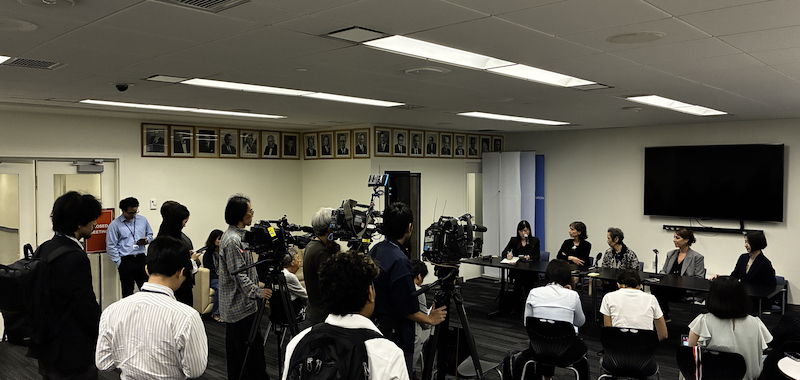
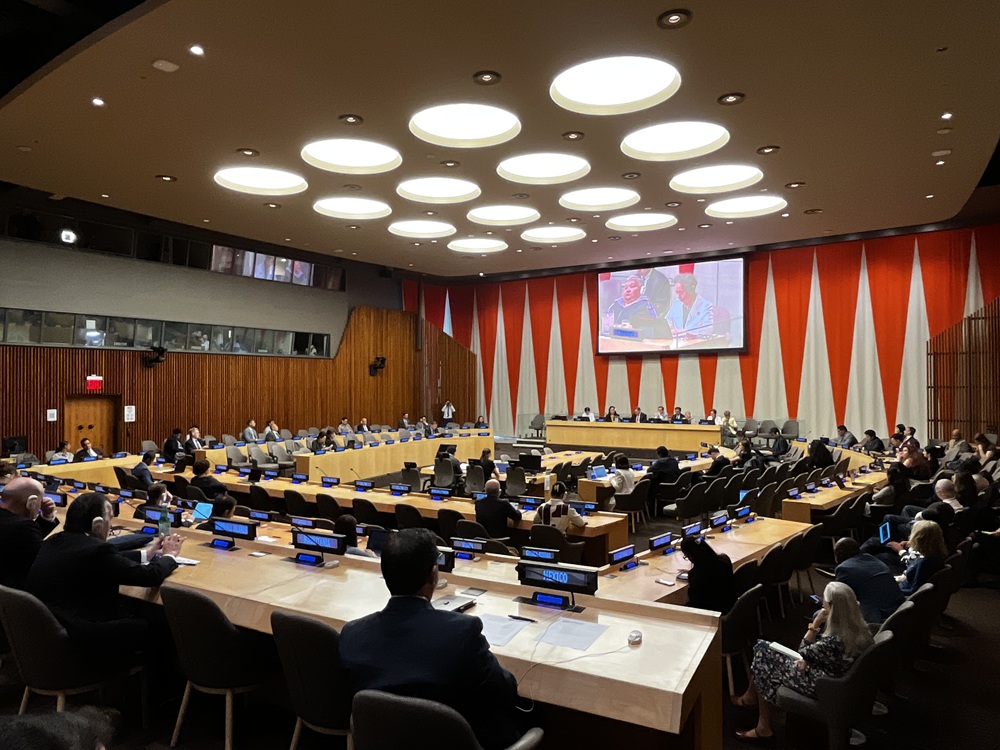
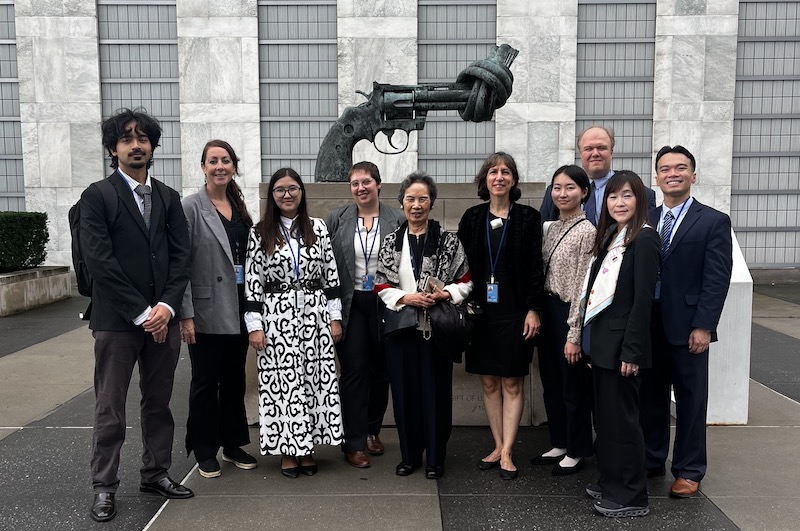
Peace Boat participated in the first-ever International Meeting on Victim Assistance and Environmental Remediation, held September 1 at the United Nations Headquarters. The meeting aimed to address the legacy of nuclear weapons by exploring the needs and mechanisms for victim assistance and environmental remediation of affected UN member states. Sponsored by the Republics of Kazakhstan and Kiribati, two states affected by nuclear testing, the meeting is mandated by the UN resolution 79/60. Wada Masako, Assistant Secretary General of the Japan Confederation of A-and H-Bomb Sufferers Organizations (Nihon Hidankyo) spoke in the opening high-level session, alongside artist and nuclear survivor Karipbek Kuyukov of Kazakhstan. Peace Boat supported the meeting's Civil Society Coordinator, the Nuclear Age Peace Foundation (NAPF), in facilitating the participation of affected communities and civil society organizations.
Reflecting on her mother’s experience of the atomic bombing of Nagasaki in August 1945, Wada shared that “she would occasionally speak of those days when she felt she had lost her humanity. Every August, she felt that same smell return. She used to say, ‘People weren’t born just to be burned like trash. Beneath that mushroom cloud were people—each with a name—loved ones, family, and lives that mattered more than anything else.’”
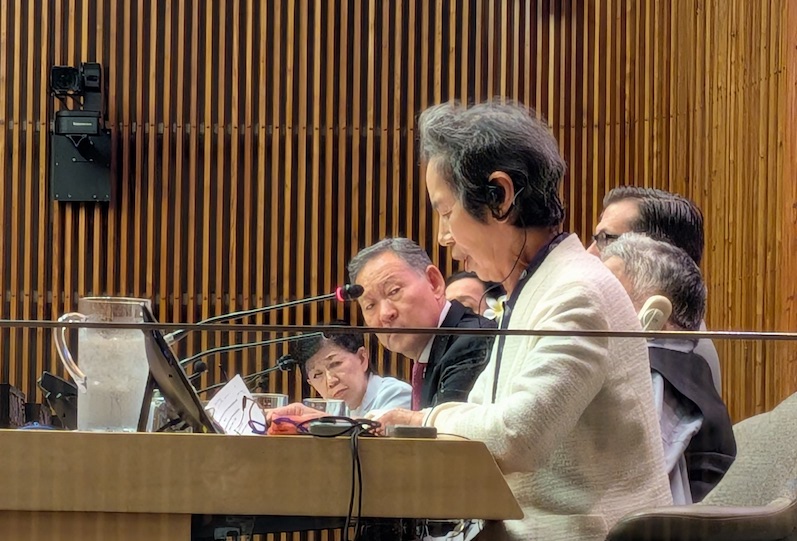
Wada went on to share the core demands of Nihon Hidankyo’s 70-year movement, namely the abolition of nuclear weapons and State compensation for the A-bomb damage, and outlined the three laws their struggles have led to being enacted, including both their achievements and also limitations. Her closing words to the room stood firmly: "No more War! No more Hibakusha!"
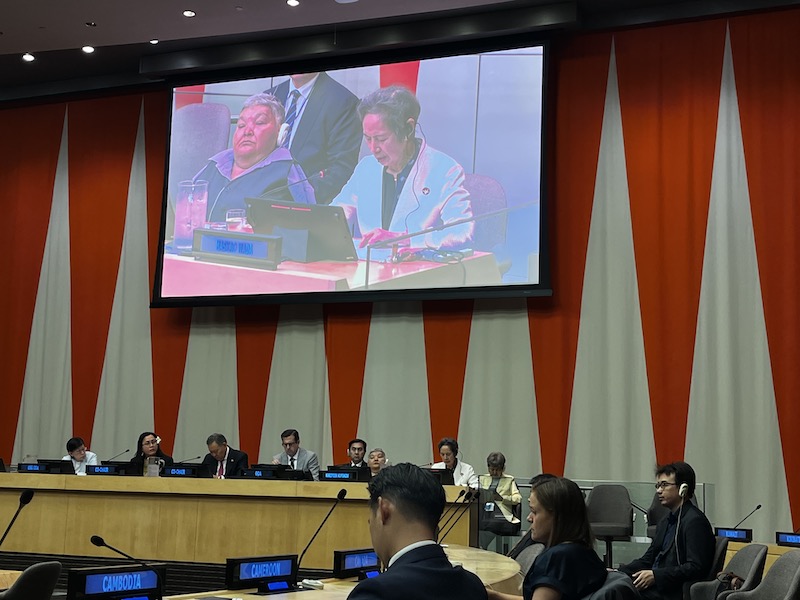
Other speakers also explored issues Wada raised, including both member states and civil society representatives. Speakers stressed that listening to survivors must shape international policy, that nuclear states have yet to be held accountable, and that assessing affected areas requires sustained scientific expertise over the long-term, because the consequences of nuclear weapons testing do not end when the testing or detonations end. Affected community members from Kyrgyzstan, the United States, Kiribati, the Marshall Islands and the Democratic Republic of Congo addressed the meeting, joined also by numerous civil society representatives, including from Korea. Their statements can be accessed on the Nuclear Age Peace Foundation website here.
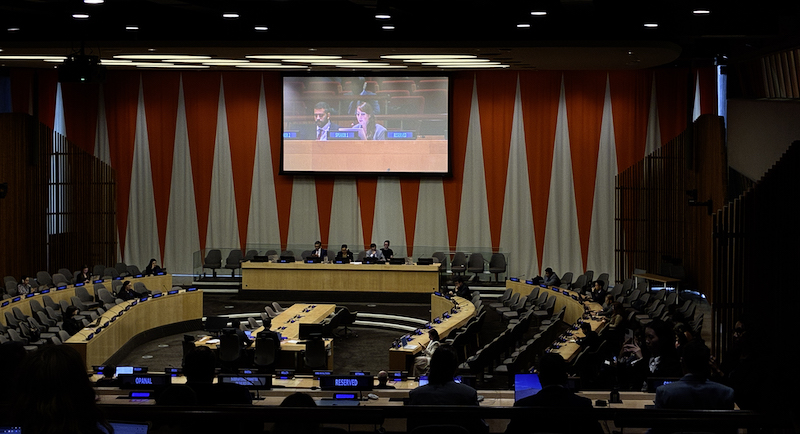
Peace Boat’s statement (full text here) was presented by Peace Boat US Director Emilie McGlone, focusing on lessons from Japan’s Hibakusha relief system, and principles of international cooperation. “The starting point for all victim assistance is defining who is recognized. Japan’s experience shows that while official definitions may be narrow, victims themselves as well as civil society in affected areas advocate for broader rights. Civil society and diverse impacted voices must therefore be involved in the design of victim assistance policies.”
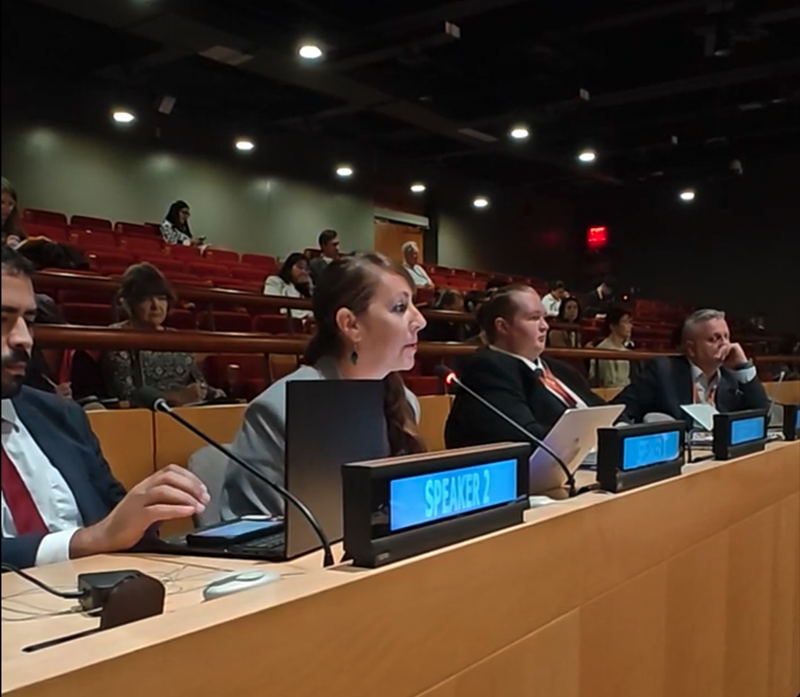
Coming just days after the International Day Against Nuclear Tests, observed annually on August 29, the meeting underscored the need to hold states accountable for victim assistance and environmental remediation, and to ensure that the voices of those affected are at the center of all relevant discussions and policies. Building upon this meeting, Peace Boat welcome discussions within the framework of the Treaty on the Prohibition of Nuclear Weapons (TPNW) toward the establishment of an international trust fund for victim assistance and environmental remediation, and encouraging all countries, including those not yet party to the TPNW, to participate actively in the upcoming Review Conference to be held at the United Nations Headquarters this November-December.