

News
What Makes Us Safer? Peace and Climate Justice Onboard Peace Boat
On 21 September, the International Day of Peace, participants onboard Peace Boat took part in a day of learning and action exploring the climate emergency and its connections with peace, justice and demilitarisation.
Organized by Peace Boat International Director Ito Masae, the programme formed part of the Global Week of Action for Peace and Climate Justice, held from 21 to 27 September 2026. Peace Boat is one of the international coordinators of the Week, which brings together organizations and communities around the world to challenge the systems driving both climate breakdown and militarisation and to call for resources to be redirected towards people and the planet.
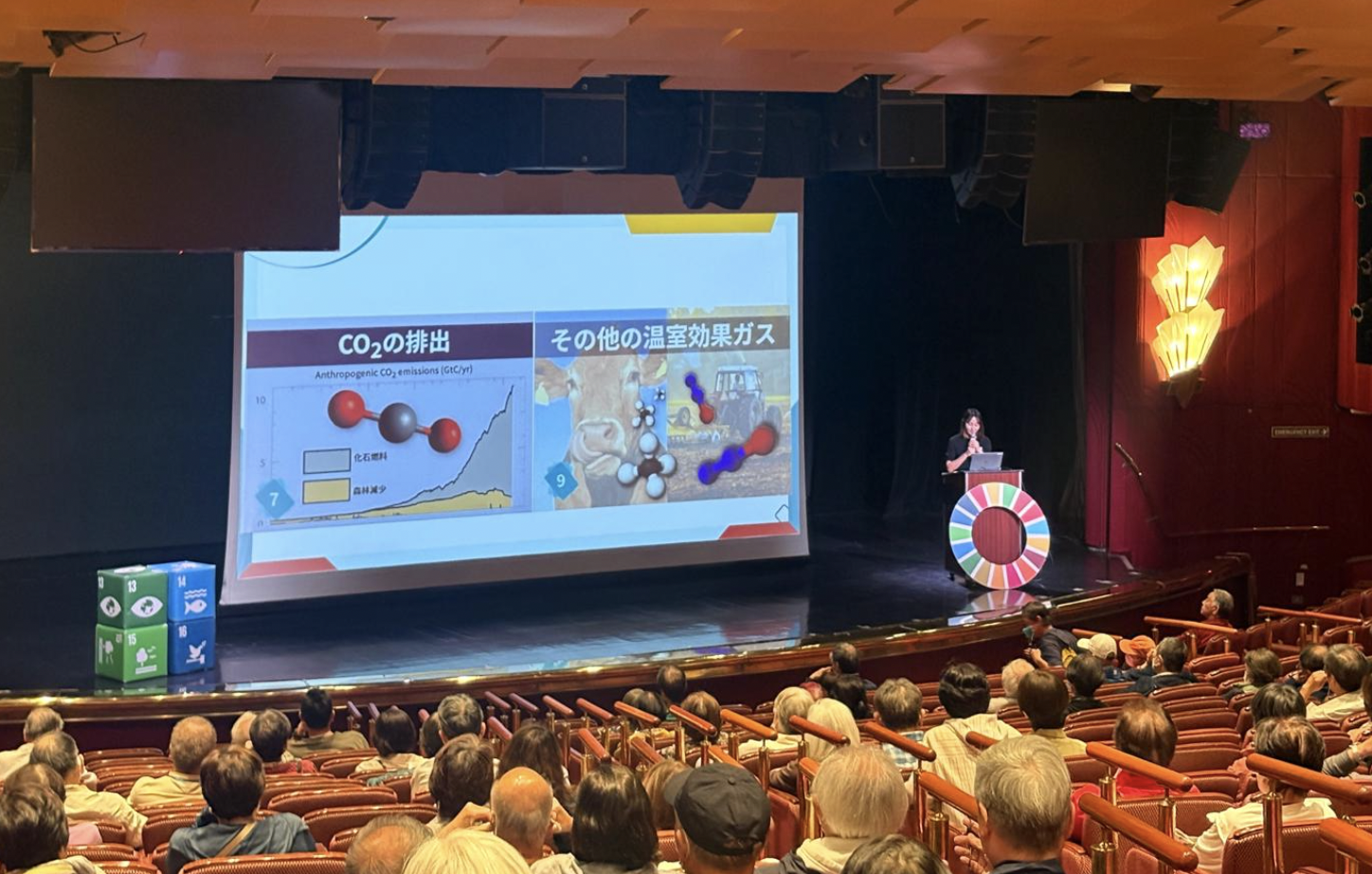
The day began with ABC of Climate Change, an introductory lecture explaining what climate change is, why it is happening and how greenhouse-gas emissions from burning fossil fuels are changing the Earth’s climate. Participants considered how rising temperatures are affecting oceans, weather patterns and communities around the world.
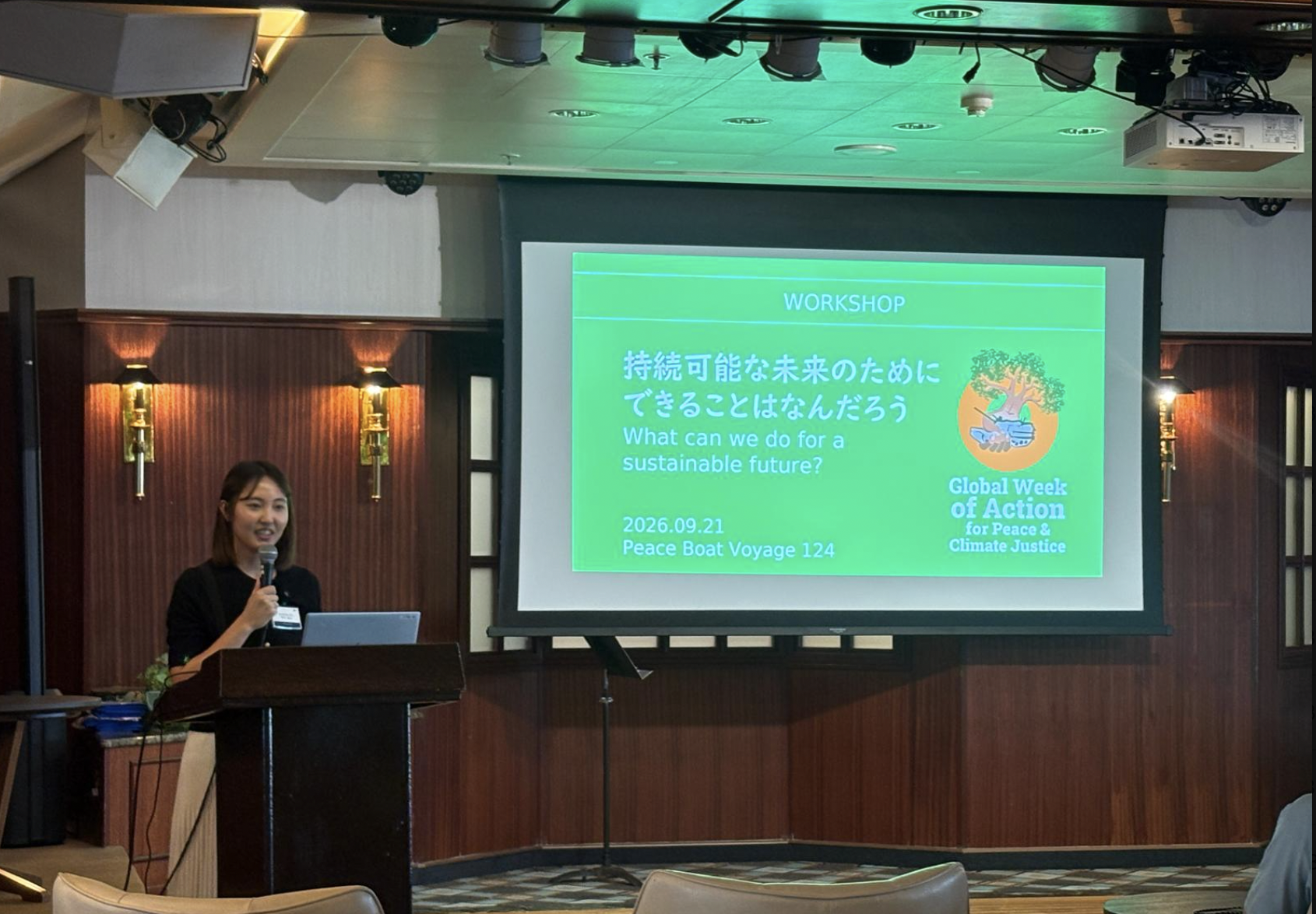
A workshop entitled For a Sustainable Future then explored what people can do in their own lives, as well as the changes that governments and companies must make. Participants discussed the importance of individual action while recognizing that personal choices alone cannot address a crisis created by wider economic and political systems. Governments must also be pressed to reduce emissions, end dependence on fossil fuels and invest in fair and effective climate solutions.
The final lecture, What Makes Us Safer? Peace, Climate Justice and Demilitarisation, introduced two concepts that may have been unfamiliar to many participants: climate justice and militarism.
Climate justice begins with the recognition that climate change is profoundly unfair. People and countries that have contributed least to global emissions are often experiencing some of the most serious consequences, while having the fewest resources with which to respond. Small Island Developing States, for example, face rising seas, stronger storms, damage to freshwater supplies and the possible loss of homes, cultures and territories.
At the same time, climate change affects everyone. The lecture referred to recent extreme heat, floods and other climate impacts across Japan, China, the Republic of Korea, Singapore and Nepal, as well as wildfires in Europe and other regions. From the deck of a ship crossing the ocean, the connections between communities, ecosystems and the global climate are particularly visible.
Climate justice is not only about reducing carbon emissions. It also means changing the unequal and extractive systems that created the climate emergency, ensuring that affected communities shape the solutions and rejecting the idea that some people, places or ways of life are expendable.
The lecture then examined militarism: the system that gives military power and military responses an increasingly central place in politics and society. Militarism contributes to climate breakdown through the enormous use of fossil fuels by military aircraft, ships, vehicles, bases and supply chains. The best available estimate suggests that the global military carbon footprint accounts for approximately 5.5 per cent of global greenhouse-gas emissions, although incomplete reporting makes the exact total difficult to establish.
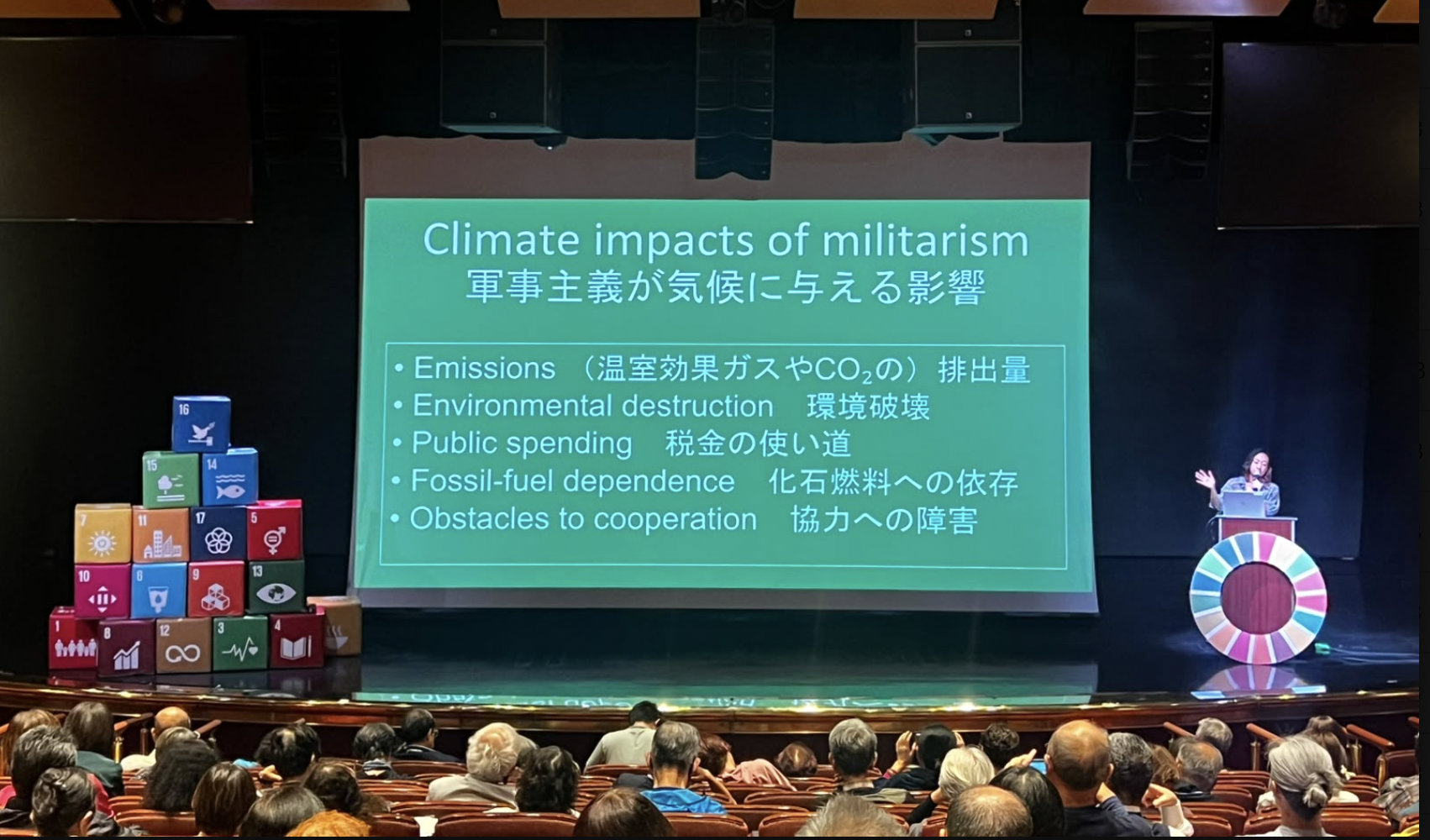
Rising military expenditure also means greater production of weapons, expansion of military infrastructure and increased military activity, locking societies into further fossil-fuel use. Global military spending reached a record US$2.887 trillion in 2025. These resources, together with skilled workers, technology, materials and political attention, could instead help finance renewable energy, climate adaptation, disaster preparedness, healthcare and other foundations of genuine safety.
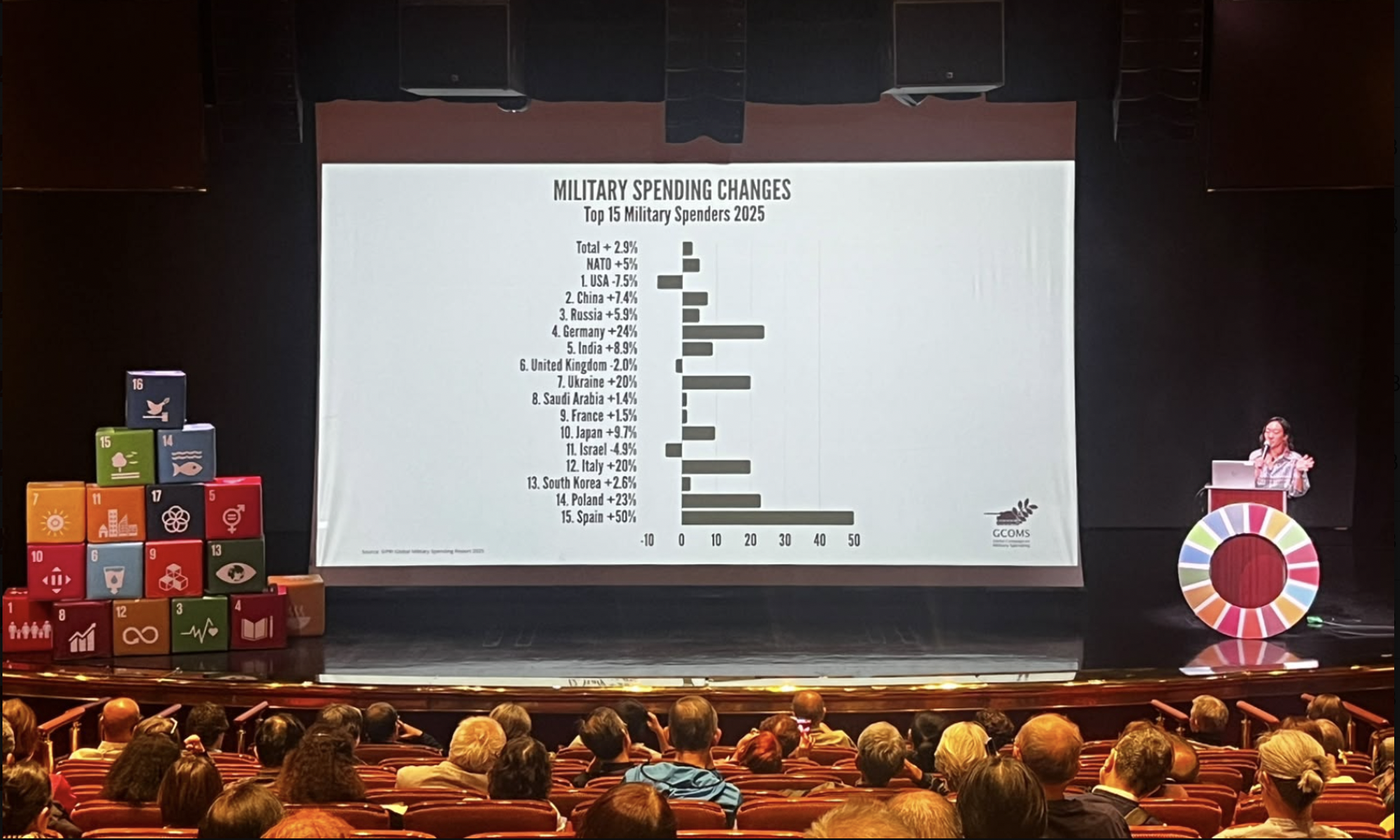
The discussion emphasized that the connection between militarism and the climate crisis is not limited to the environmental destruction caused during war. It is also about the choices societies make: whether to respond to insecurity through competition, control and armed force, or through cooperation, conflict prevention, care and investment in communities.
Peace Boat is working to advance demilitarised responses to the climate emergency. As a founding member of the Global Partnership for the Prevention of Armed Conflict, Peace Boat supports increasing work on climate, peace and security that emphasizes locally led peacebuilding and cooperation rather than treating climate-related insecurity as a problem for military force.
Peace Boat Disaster Relief, known as PBV, puts this approach into practice following disasters, including climate-related disasters. PBV works with local communities and strengthens civilian capacity, without assuming that disaster responses should be military-led or framing the climate emergency as a “war on climate change.”
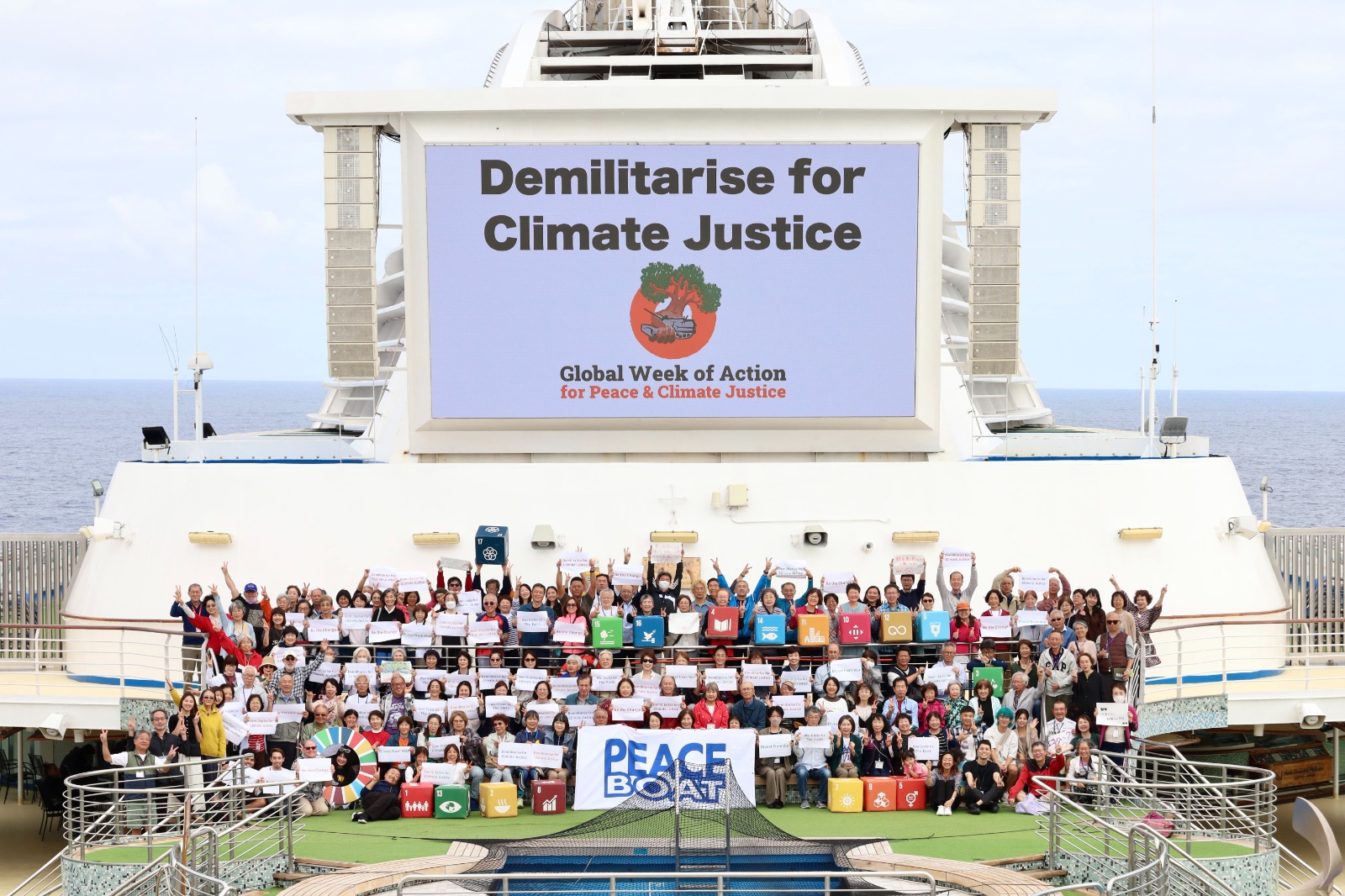
The day concluded with a photo action on the top deck carrying the message: Demilitarise for Climate Justice connecting participants onboard Peace Boat with people taking action around the world.
The programme invited participants to return to one central question: What really makes us safer? Ever-growing military budgets and preparation for conflict, or cooperation, climate action, resilient communities and investment in a peaceful and liveable future for all?
Peace Boat also organized a webinar with members of the Peace and Demilitarisation Working Group of the Women and Gender Consituency, "Fuelling War and Climate Breakdown: Feminist Perspectives on Accountability and Action". The recording will be made available soon.