

From the Ship
From Listener to Survivor: Zahra Kalantari’s Journey Through the War in Iran
Zahra Kalantari, a volunteer at the Tehran Peace Museum in Iran, reports from Iran on the destructive war that has her country in a vicious grip. “In just forty-eight hours, I was transformed from a peace activist speaking about the trauma of Iran-Iraq war victims into a person living through that very reality herself.”
Zahra joined Peace Boat’s 120th Global Voyage in 2025 as part of the project commemorating the 80th anniversary since the end of World War II, TIME FOR PEACE, to speak about the legacy of the Iran-Iraq war (1980–1988) and the work of the Tehran Peace Museum. Peace Boat has a longstanding partnership with the Tehran Peace Museum and works to bring the voices of peacebuilders and conflict survivors to global audiences.
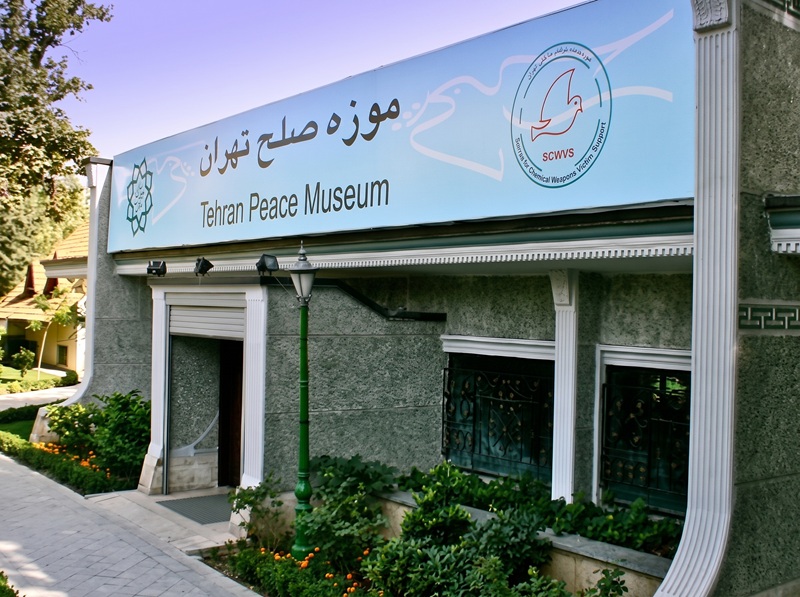
What is the Tehran Peace Museum?
From the very first day I entered the Peace Museum of Tehran at the age of eighteen, I came face to face with the true, devastating consequences of war and the enduring struggles of its victims in the post-war period. I spent many years of my adolescence and youth alongside them, particularly the survivors of chemical weapons attacks—individuals in whom the violence of war persists in both body and soul, even decades later. Despite this, they volunteer their time to raise awareness and promote peace. By sharing their life stories and their experiences of conflict, they help cultivate a culture of peace. The Peace Museum of Tehran was the first place where I truly grasped the real meaning of what it is to be a victim of war. It was there that I understood that war continues to unfold in people's lives long after the last explosion has fallen silent.
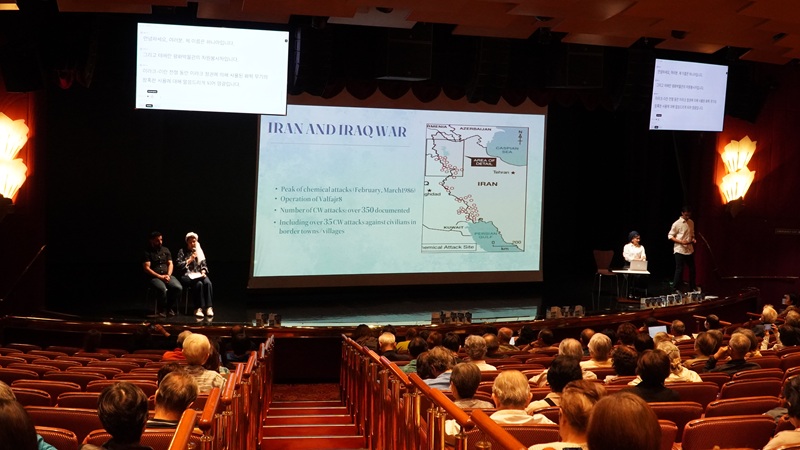
Sailing on Peace Boat’s 120th Global Voyage
As a child, my first impression of war was defined by images of blood, fire, and physical ruin. But the truth is, until I experienced it myself, I never truly understood the deeper meaning of this three-letter word. The first time I confronted its reality directly was during the summer of 2025, when I joined Peace Boat’s 120th Global Voyage in its European segment. I was scheduled to speak about peace, dialogue, and friendship. Yet, within days of my departure, my country became engulfed in war. In just forty-eight hours, I was transformed from a peace activist speaking about the trauma of Iran-Iraq war victims into a person living through that very reality herself. I was far from my family, with no news of their safety, and I was expected to continue speaking about peace according to my duty. This painful duality was one of the strangest and most emotionally challenging experiences of my life.
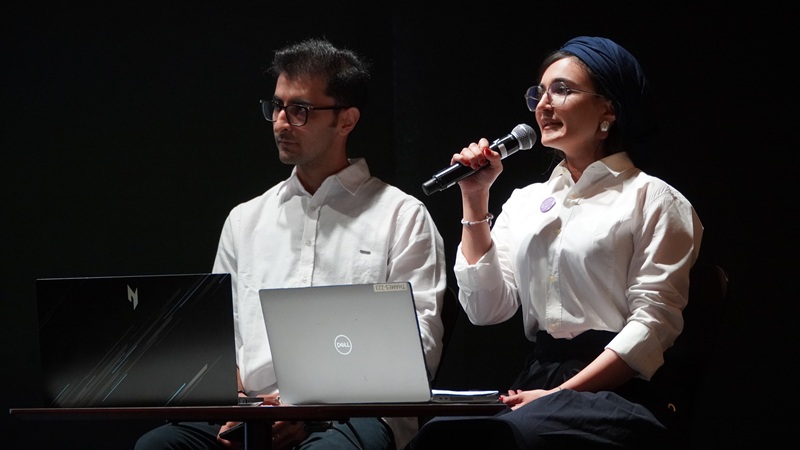
This new chapter not only redefined my personal identity but also reshaped the collective identity of Iranians both at home and abroad. We had all become war-affected, victims, or casualties of conflict. I came to realize that war is not merely destruction or the shedding of blood; it is something far more insidious. Its greatest harm lies in the gradual erosion of humanity—the haunting guilt of no longer being able to laugh freely, knowing that at that very moment, somewhere else, a family may have lost their most beloved.
Click here for more information on Zahra’s time onboard Peace Boat.
Stolen Futures
I am now in Tehran, writing these words while my country remains entangled in an imposed war. The cities of southern Iran endure dozens of bombs and missiles daily. Thousands of civilians have been displaced, have lost loved ones, or are grappling with the deep psychological terror triggered by the sound of explosions.
On February 9th of this year, a new wave of violence transformed the lives of thousands of Iranians. It began with the massacre of over 160 schoolchildren at an elementary school in the city of Minab. Amidst the torrent of grim news from this atrocity, one child was never found, and one child was never identified. Dozens of them were not buried with their bodies intact. I think of their mothers. I think of their school backpacks, the hope they had for playing after school, the expectation of sharing a snack with friends, and the futures they had envisioned. How many of them were going to become doctors, or engineers, or kind mothers? I think of their unfinished lives. Perhaps the greatest loss of war is not the destroyed buildings, but the lives that remain forever incomplete.
The real face of war reveals itself when we can no longer trust the sky above us, and we are forced to imagine our childhood dreams amidst the dust and smoke of explosions. Yet war has another side, too—a shared sorrow that paradoxically draws people closer together. In times of war, you appreciate your neighbours, friends, and family more than ever. You appreciate the simple act of sitting together, everyday conversation, and moments that once seemed utterly mundane. War makes you profoundly grateful.
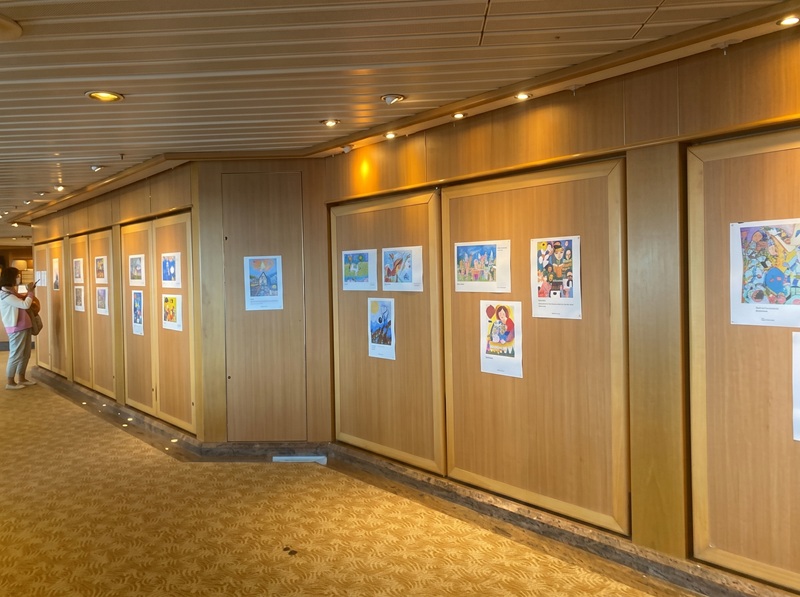
Artwork drawn by children of Iran for the Mayors for Peace Children’s Art Competition “Peaceful Towns” was exhibited on board Peace Boat on Zahra’s initiative
Reclaiming Hope
This three-letter word is the most unjust tragedy that can befall any nation. War is akin to forced migration: you have to pack an entire lifetime into a single backpack. On social media, you learn which items are essential for survival and which to carry with you. But how can you fit all the figurines you lovingly arranged on the windowsill into one bag? How can you fit all the books you carefully collected over the years? In war, you become more grateful—grateful for colourful tablecloths, for spontaneous gatherings, for beautiful friendships, for arguments with colleagues, for afternoon teas, and for the bitter coffee shared in the office.
I wish no human being ever had to experience war. War destroys memory, erases the feeling of safety, and annihilates the meaning of home. It takes years for normality to return to society, but many people never truly return from war. For years afterward, at the sudden sound of an aircraft, the smell of smoke, or the darkness of night, they relive those traumatic moments all over again.
Now, I have become part of the narrative—a storyteller alongside those at the Peace Museum. I am no longer just a listener to the stories of war. Despite everything, in these difficult days, we at the Peace Museum strive to keep hope alive in our own hearts and in the hearts of others. Through education, the promotion of resilience, and the fostering of empathy, we take one small step forward in these impossible circumstances.
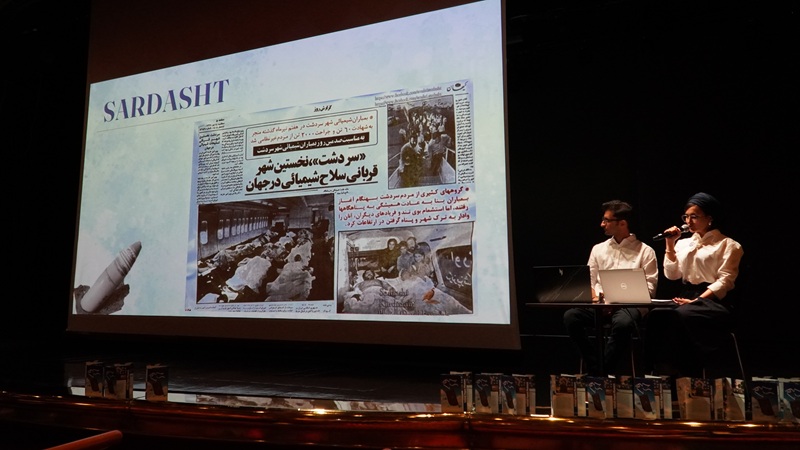
The Tehran Peace Museum, located in the historic City Park in downtown Tehran, opened its doors in 2007 . As the first peace museum in the Middle East its primary mission is to promote a culture of peace by raising awareness about the devastating human and environmental toll of war with focus on chemical warfare. The museum is a member of the International Network of Museums for Peace, and its staff are largely war veterans and survivors of chemical attacks, who serve as volunteer guides . The museum houses an archive of oral histories, a peace library, and hosts workshops and conferences on disarmament, tolerance, and peace education, transforming a narrative of suffering into a powerful drive for peace and understanding.